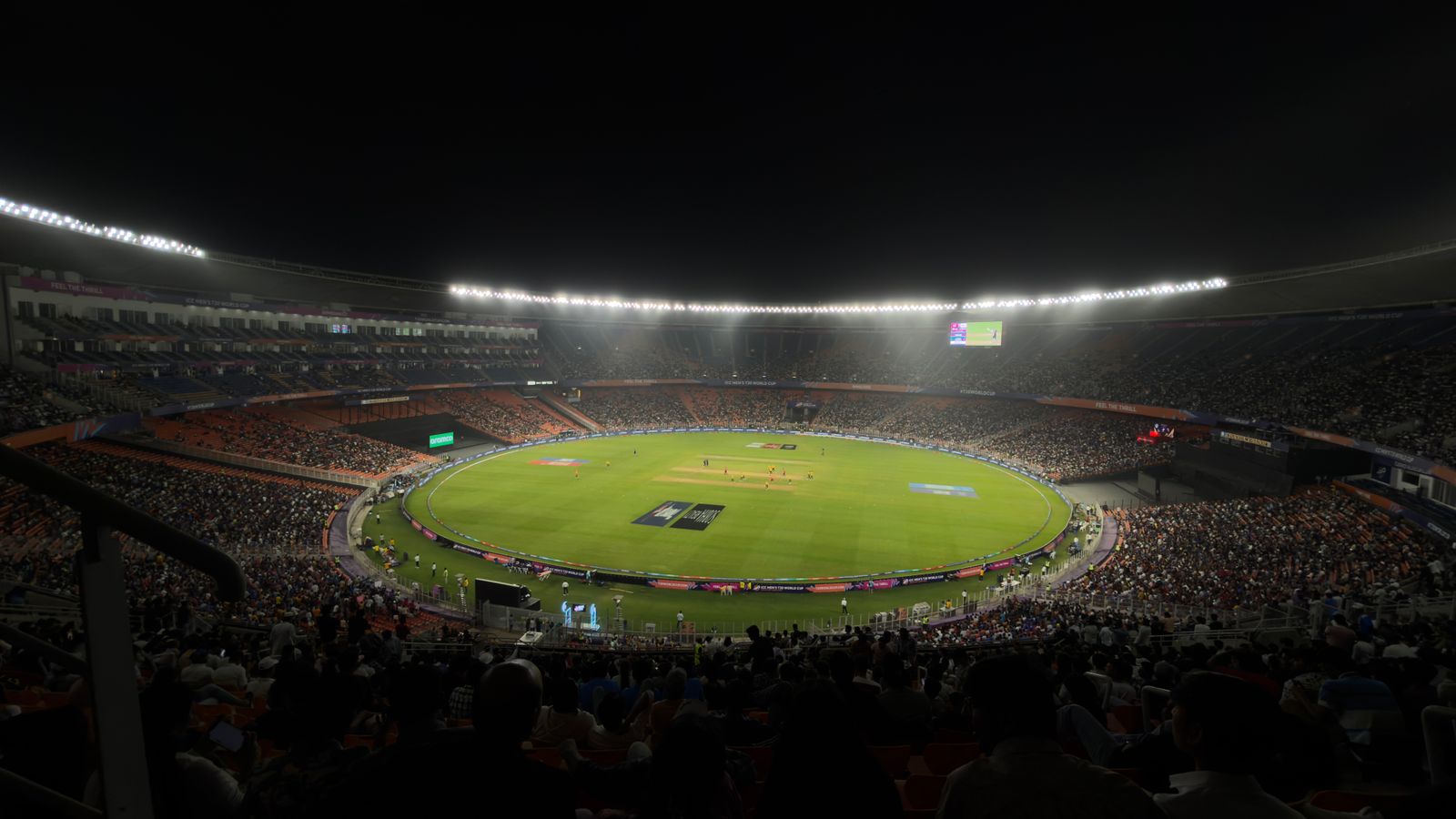
The Abhishek Sharma fastest T20I century arrived in the ninth over of a night game in Delhi, and it arrived so quickly that most of the people watching had not yet worked out what record was being broken. Thirty balls. Afghanistan had won the toss and put India in, which is a defensible decision at the Arun Jaitley Stadium and looked like a catastrophic one inside twenty minutes. By the time the powerplay ended India had 100 on the board without losing anybody, and Abhishek had 76 of them.
The innings has been reported everywhere in the hours since, and the reporting has not been uniformly accurate. That is not a swipe at the agencies — a record broken at 11pm local time, mid-innings, with a live chase to follow, is exactly the situation in which numbers get transposed. But it does mean the version of this innings circulating online is wrong in three specific and checkable ways, and it seems worth starting there rather than burying it.
What the official scorecard actually records
Everything below is read off the ESPNcricinfo full scorecard for T20I number 4128, rather than from the write-ups. The two disagree, and where they do, the scorecard wins.
| Measure | Official scorecard |
|---|---|
| Final score | 108 |
| Balls faced | 34 |
| Fours | 9 |
| Sixes | 11 |
| Strike rate | 317.64 |
| Minutes at the crease | 45 |
| Balls to fifty | 16 (5 fours, 5 sixes) |
| Balls to hundred | 30 (9 fours, 10 sixes) |
| Dismissal | c †Rahmanullah Gurbaz b Rashid Khan |
| Fell at | 142 for 1, in the 9.5th over |
Source: ESPNcricinfo full scorecard, T20I no. 4128. The fifty and hundred splits are taken from the match-flow log on the same page.
The three things the early reports got wrong
The discrepancies are small individually and add up to a meaningfully different innings. The most common error collapses two separate numbers into one: the hundred came off 30 balls, and the innings ended at 108 off 34. Several outlets printed “108 off 30”, which would be a materially faster innings than the one that was actually played, and would also imply he was dismissed on the same ball he reached three figures.
| Detail | As reported in early copy | As recorded on the scorecard |
|---|---|---|
| Innings length | 108 off 30 balls | 108 off 34 balls |
| Balls to the hundred | Conflated with the innings total | 30 |
| Sixes | 10 | 11 (10 of them before reaching 100) |
| Mode of dismissal | Bowled by Rashid Khan | Caught behind by Gurbaz, bowled Rashid Khan |
The six count is the clearest illustration of how the error happened: he had 10 sixes when he reached his hundred and hit one more before he was out. Both numbers are correct about different moments.
How the 30 balls were actually built
The shape of the Abhishek Sharma fastest T20I century is more interesting than the headline number, because it was not a slow start followed by an explosion. It was an explosion followed by a slightly faster explosion. Abhishek reached fifty from 16 balls with five fours and five sixes; he then took 14 more deliveries to move from 50 to 100, adding four fours and five sixes in that stretch. The second fifty was very marginally slower than the first.
| Phase | Balls | Runs | Fours | Sixes |
|---|---|---|---|---|
| 0 to 50 | 16 | 50 | 5 | 5 |
| 50 to 100 | 14 | 50 | 4 | 5 |
| 100 to 108 | 4 | 8 | 0 | 1 |
| Full innings | 34 | 108 | 9 | 11 |
Derived from the cumulative milestone figures on the scorecard's match-flow log. The boundary counts across the three phases reconcile exactly to the innings totals of 9 fours and 11 sixes.
Twenty of his 34 deliveries went to the boundary or over it. That is the statistic that explains the strike rate better than the strike rate itself does: 96 of his first 100 runs came in boundaries, meaning he ran a total of four singles or twos on the way to the fastest hundred an Indian has made in the format.
100 runs. No wickets. Thirty-six balls.
India's powerplay, overs 0.1 to 6.0
India's opening stand reached fifty in 21 balls and a hundred in 36. Sanju Samson, at the other end, had 24 of that opening hundred and would go on to make a perfectly respectable fifty from 35 balls that almost nobody will remember. He had the best seat in the ground and the least enviable job in it.
Where this sits in the record books
The previous Indian record belonged to Rohit Sharma, who reached a hundred from 35 balls against Sri Lanka at the Holkar Stadium in Indore in December 2017. That mark had stood for close to nine years. ESPNcricinfo's own match coverage headlines the innings as the fastest T20I hundred by a Full Member batter, which is the distinction that matters here, and the one most worth explaining.
| Batter | Team | Balls | Nation status |
|---|---|---|---|
| Sahil Chauhan | Estonia | 27 | Associate |
| Muhammad Fahad | Turkey | 29 | Associate |
| Abhishek Sharma | India | 30 | Full Member |
| Rohit Sharma | India | 35 | Full Member |
Abhishek's 30 balls is the fastest by a Full Member batter and third-fastest overall. Associate figures as reported by ESPNcricinfo and news agencies covering the record.
For context on how unusual 30 balls is even in a format built for this: twenty-four hours earlier, Harry Brook made a hundred from 42 balls for England against Sri Lanka and it was treated, correctly, as a remarkable innings — we wrote about why the Pietersen mentor narrative did not explain it. Abhishek got there twelve balls sooner.
The innings the hundred concealed
Here is the part that has gone almost entirely unreported, because the Abhishek Sharma fastest T20I century absorbed all the available attention. India were 142 for 1 when Abhishek was caught behind in the tenth over. They finished on 221 for 7. The last 61 balls of the innings produced 79 runs and cost six wickets.
| Phase | Balls | Runs | Wickets | Run rate |
|---|---|---|---|---|
| Overs 0.1 – 9.5 | 59 | 142 | 1 | 14.44 |
| Overs 9.6 – 20.0 | 61 | 79 | 6 | 7.77 |
| Full innings | 120 | 221 | 7 | 11.05 |
Phase run rates calculated from the scorecard's fall-of-wicket entries. Abhishek fell at 142 for 1 in the 9.5th over; the innings closed at 221 for 7.
Runs per over, calculated from the scorecard's fall-of-wicket entries. The back half of the innings scored at little more than half the rate of the first.
A run rate of 7.77 across the back half of a T20 innings, with wickets in hand at the start of it, is poor. Three of the six wickets in that stretch were run-outs — Tilak Varma, Shreyas Iyer and Ishan Kishan all went that way, with Rashid Khan, Ibrahim Zadran and Rahmanullah Gurbaz doing the damage in the field. Afghanistan's ground fielding after the powerplay was, on the evidence of the scorecard, the best thing they did all innings.
What Afghanistan's bowlers actually achieved
The bowling figures repay a close look, because they are not the massacre the total suggests. Two of the six bowlers went at under ten an over in an innings where the team rate was 11.05.
| Bowler | O | R | W | Econ |
|---|---|---|---|---|
| Azmatullah Omarzai | 3 | 27 | 2 | 9.00 |
| Abdollah Ahmadzai | 4 | 38 | 1 | 9.50 |
| Fazalhaq Farooqi | 4 | 39 | 0 | 9.75 |
| Rashid Khan | 4 | 43 | 1 | 10.75 |
| Mujeeb Ur Rahman | 4 | 45 | 0 | 11.25 |
| Mohammad Nabi | 1 | 29 | 0 | 29.00 |
Sorted by economy rate. Azmatullah Omarzai took the two wickets that were not run-outs among the top order, removing both Samson and Shivam Dube.
Economy rate, runs per over. Five of the six bowlers sit in a narrow band between 9.00 and 11.25; the sixth is the reason the total looks the way it does.
Mohammad Nabi's single over cost 29, which is very close to the worst a single over can go without extras, and it is fair to assume it was bowled into the teeth of the Abhishek assault. Strip that over out and Afghanistan's other five bowlers conceded 192 from 19 overs, a rate of 10.10. Still expensive. Not humiliating.
Rashid Khan finished with 4-0-43-1 and the prize wicket. Ten of his 24 deliveries were dot balls, which against a batter striking at better than 300 is a genuine piece of work, even allowing for the runs that came off the other fourteen.
Abhishek Sharma's 2026, in context
This was Abhishek's third T20I hundred, alongside twelve half-centuries in the format. The record that gets less attention than the century is his six-hitting inside the field restrictions: agency reporting on the night put his 2026 tally of powerplay sixes in T20Is at 37, passing his own previous best of 34 set in 2025, with seven of them struck in this innings alone.
How the match finished
This article was first published while the chase was still in progress, at which point Afghanistan were 39 for 3 and this section declined to predict a result. The match has since finished, and the figures below are the completed ones.
| Measure | Result |
|---|---|
| India | 221 for 7 from 20 overs |
| Afghanistan | 94 all out in 14.1 overs |
| Margin | India won by 127 runs |
| Series | India won 3–0 |
| India’s leading bowler | Nitish Kumar Reddy, three wickets |
Afghanistan lost their last seven wickets for 47 runs.
India used five bowlers and all five took a wicket. Axar Patel’s three overs for nine runs is the most remarkable set of figures on either card — an economy rate of 3.00 in an innings where the opposition had just conceded 221.
| Bowler | O | R | W | Econ |
|---|---|---|---|---|
| Axar Patel | 3 | 9 | 2 | 3.00 |
| Nitish Kumar Reddy | 4 | 25 | 3 | 6.25 |
| Jasprit Bumrah | 2 | 16 | 1 | 8.00 |
| Ravi Bishnoi | 3.1 | 26 | 3 | 8.21 |
| Yash Thakur | 2 | 17 | 1 | 8.50 |
Sorted by economy rate. Nitish Kumar Reddy and Ravi Bishnoi took three wickets each; Bishnoi bowled the ball that ended the match.
Final Verdict
The Abhishek Sharma fastest T20I century is the real thing, and it is not diminished by any of the corrections above — if anything the accurate version is more impressive than the garbled one, because a 30-ball hundred against Rashid Khan and Mujeeb Ur Rahman is a harder act than a 30-ball innings of 108 against nobody in particular. Nine years of Rohit Sharma's record ended in the ninth over of a Wednesday night game, and the man who ended it did it by hitting twenty of his thirty-four deliveries to or over the rope.
Two things deserve to survive the news cycle alongside the number. The first is that India's innings after he left was genuinely bad — 79 runs from 61 balls with three run-outs, on a surface where the opening pair had just scored at better than fourteen an over. A total of 221 looks overwhelming and was, on the evidence of the first ten overs, at least thirty runs short of what was available. The second is that Afghanistan's attack was not disgraced. Take out one over from Nabi and the rest went at almost exactly ten, which against this batting line-up on this ground is a night's work rather than a disaster.
And the third, smaller point: check the scorecard. The gap between what the record books will eventually say and what was published in the first hour after the event is four balls, one six, and a mode of dismissal — which is the sort of gap that gets copied forward indefinitely if nobody goes back to the primary source.
Frequently asked
- How many balls did Abhishek Sharma take to score his century?
- Thirty. He reached 100 off 30 balls with 9 fours and 10 sixes, according to the official ESPNcricinfo scorecard for the third T20I against Afghanistan at the Arun Jaitley Stadium in Delhi on 17 September 2026.
- What was Abhishek Sharma’s final score?
- He finished on 108 from 34 balls with 9 fours and 11 sixes, a strike rate of 317.64. Several early reports said 108 off 30 balls, which conflated his final score with the 30 balls he took to reach his hundred.
- Whose record did Abhishek Sharma break?
- Rohit Sharma’s. Rohit had made a 35-ball T20I hundred against Sri Lanka at the Holkar Stadium in Indore in December 2017, which had stood as the fastest by an Indian for close to nine years.
- Is this the fastest T20I century ever?
- No. It is the fastest by a batter from a Full Member nation and the third-fastest in all men’s T20Is. Sahil Chauhan of Estonia reached a hundred in 27 balls and Muhammad Fahad of Turkey in 29, both for Associate nations.
- How was Abhishek Sharma dismissed?
- He was caught behind by wicketkeeper Rahmanullah Gurbaz off the bowling of Rashid Khan, at 142 for 1 in the 9.5th over. Some early reports said he was bowled by Rashid Khan, which the scorecard does not support.
- What was India’s total in the third T20I?
- India made 221 for 7 from their 20 overs. They were 142 for 1 when Abhishek fell, meaning the final 61 balls produced only 79 runs and cost six wickets, three of them run-outs.