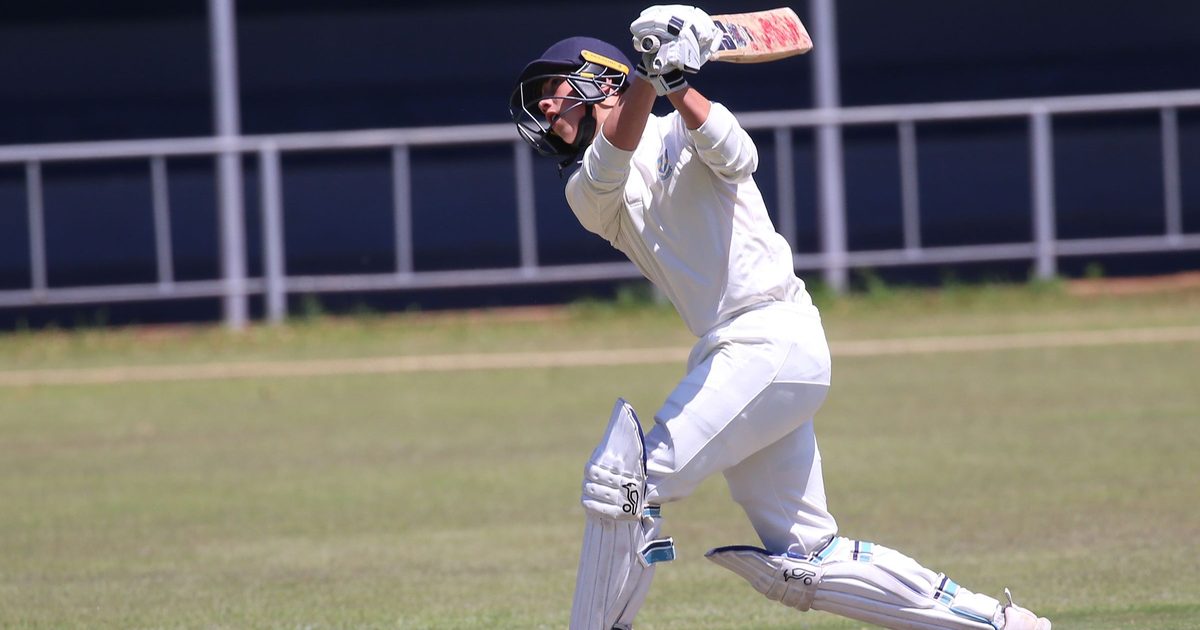
England vs Sri Lanka at the Utilita Bowl produced the kind of opening night that writes its own headline: a captain’s 42-ball hundred, 254 for four, a 119-run victory, and a newly appointed mentor watching from the coaching area on his first day in the job. Harry Brook finished unbeaten on 114 from 49 deliveries with ten fours and six sixes. Jos Buttler made 80. Sri Lanka were dismissed for 135.
Every element of that is verifiable. The causal story being layered over it — that Kevin Pietersen’s arrival unlocked something — is not, and it is worth separating the two before the narrative hardens.
What happened
| Item | Detail |
|---|---|
| England | 254 for 4 |
| Sri Lanka | 135 |
| Result | England won by 119 runs |
| Player of the match | Harry Brook |
| Brook | 114 not out from 49 balls, 10 fours, 6 sixes |
| Buttler | 80 |
| Second-wicket partnership | 128 |
| Series | Vitality T20 series, first of the Sri Lanka tour |
A 128-run second-wicket stand between the captain and the most destructive white-ball batter England have produced in a generation is the passage that decided the match. Everything after it was arithmetic.
Where the hundred sits
| Batter | Balls to 100 | Opposition | Year |
|---|---|---|---|
| Phil Salt | 39 | South Africa | 2025 |
| Liam Livingstone | 42 | Pakistan | 2021 |
| Harry Brook | 42 | Sri Lanka | 2026 |
The detail worth keeping is how close the margin was. Brook needed a six from the delivery that took him to a hundred to match Phil Salt’s 39-ball record; he got there in 42 and settled for equalling Livingstone. Three balls, across five years of England white-ball cricket, separate first from joint second.
The number that reframes the innings
This was Brook’s first century in 18 international innings across all formats — his first since the World Cup win against Pakistan in February. A captain leading England into a World Cup year had gone more than half a year, across three formats, without reaching three figures.
A well-set batter in form producing 114 from 49 is a good night. A captain emerging from an eighteen-innings drought to produce England’s joint second-fastest T20I hundred is a different story entirely.
Pietersen’s first day, and the causation trap
Kevin Pietersen was appointed specialist mentor to England’s white-ball teams earlier this month, with the role taking effect from this series. The first day of that role produced 254 for four and a 119-run win. The temptation to connect the two is enormous, and it should be resisted.
A mentor appointed days before a series does not manufacture a 42-ball hundred. Brook’s technique, form curve and shot selection on 15 September were the product of months of work, not of a week. Any coach will tell you that mentoring operates on a timescale of months and that the first visible effects are usually in decision-making under pressure rather than in ball-striking.
None of this is an argument against the appointment. It is an argument against judging it on a single night in Southampton against a side that was bowled out for 135.
What a mentor role actually is
| Name | Position |
|---|---|
| Brendon McCullum | Head coach |
| Marcus Trescothick | Coaching staff |
| Tim Southee | Coaching staff |
| Jeetan Patel | Coaching staff |
| Sarah Taylor | Coaching staff |
| Kevin Pietersen | Specialist mentor, white-ball teams |
A side with a head coach, batting and bowling specialists already in place is not hiring a mentor to fix technique. The gap a mentor fills is psychological and situational — how a player thinks in the eighteenth over, how a captain manages a match that has got away, how a young batter handles the specific strangeness of a World Cup. McCullum has publicly endorsed the appointment, saying England are “very lucky to have him”.
Pietersen has done this job before
One relevant fact has been largely absent from coverage treating this as an unproven experiment: this is not Pietersen’s first mentoring role. He served as mentor to Delhi Capitals for IPL 2025, which means England have appointed someone with recent experience of exactly this kind of position rather than a former player stepping into an unfamiliar one.
That matters because mentor roles in cricket are genuinely difficult to do well. The position has no formal authority, sits alongside a head coach who does, and depends entirely on whether senior players choose to engage with it. Someone who has already spent a season navigating that ambiguity has a considerably better idea of where the role’s edges are.
| Element | Detail |
|---|---|
| Role | Specialist mentor, England white-ball teams |
| Takes effect | This Sri Lanka series — T20Is and ODIs |
| Reports into | Brendon McCullum’s white-ball set-up |
| Stated purpose | Build-up to next year’s ICC Cricket World Cup in Africa |
| Prior mentoring | Delhi Capitals, IPL 2025 |
The chase that was never on
| Situation | Required rate |
|---|---|
| From ball one | 12.75 per over |
| If 40 were scored in the powerplay (6 overs) | ~15.4 per over for the remaining 14 |
| If a wicket fell early | Rate climbs while a new batter is setting up |
| Actual outcome | All out 135, short by 119 |
A required rate of 12.75 from the first ball removes the option of building an innings. Every batter arrives needing to attack immediately, which is precisely the condition under which sides get bowled out rather than merely losing. Sri Lanka being dismissed for 135 is not evidence of a batting collapse in the usual sense; it is the arithmetically predictable consequence of conceding 254.
What it means for a World Cup squad
The series exists, in selection terms, to answer questions before the squad for Africa is settled. One night has answered one of them and left the rest open.
Brook’s place was never in doubt — he is the captain. What his innings changes is the question of whether England’s captain arrives at a World Cup in form or fighting for it, and that had become a live concern over eighteen innings. Buttler’s 80 is the other significant data point, and arguably the more reassuring one for a selector, because it came in the supporting role rather than the headline one.
What the match did not do is test anything. A bowling attack is not examined by an opposition chasing 255 from ball one, and a middle order is not examined when the top two put on 128.
What would actually constitute evidence
Final verdict
England vs Sri Lanka delivered an opening night that will be remembered for a hundred and reported as a coaching story, and the second of those is the weaker claim.
What actually happened is straightforward. A captain who had not reached three figures in eighteen international innings produced England’s joint second-fastest T20I hundred, three balls off the record. His partner made 80. Together they put on 128, England reached 254, and a Sri Lanka side that managed 135 was never in the contest.
What did not happen is that a mentor appointed a week earlier caused any of it. Kevin Pietersen’s first day coinciding with Brook’s best day is a coincidence of scheduling, and treating it as evidence — in either direction — says more about the appetite for a narrative than about English cricket.
Our read: the significant number here is 18, not 42. A captain rediscovering his timing five months out from a World Cup matters considerably more than a coincidence of appointment dates, and it is the thing to watch across the rest of this series. If Brook scores again in the next two matches, that is a form story worth telling. If he does not, one night in Southampton against a side bowled out for 135 will not have told us much at all.
Frequently asked
- Who won the first England vs Sri Lanka T20I?
- England, by 119 runs, at the Utilita Bowl in Southampton on 15 September 2026. England made 254 for 4; Sri Lanka were bowled out for 135.
- How fast was Harry Brook's hundred?
- 42 balls. He finished unbeaten on 114 from 49 deliveries with ten fours and six sixes, and was named player of the match.
- Was it an England record?
- No. It equalled Liam Livingstone's 42-ball hundred against Pakistan in 2021 as England's joint second-fastest. Phil Salt's 39-ball century against South Africa remains the record.
- Why was this century significant for Brook?
- It was his first in 18 international innings across all formats, and his first since the World Cup win over Pakistan in February.
- What is Kevin Pietersen's new role with England?
- Specialist mentor to England's white-ball teams, effective from this Sri Lanka series, in the build-up to next year's ICC Cricket World Cup in Africa. He joins a coaching group led by Brendon McCullum and previously mentored Delhi Capitals in IPL 2025.