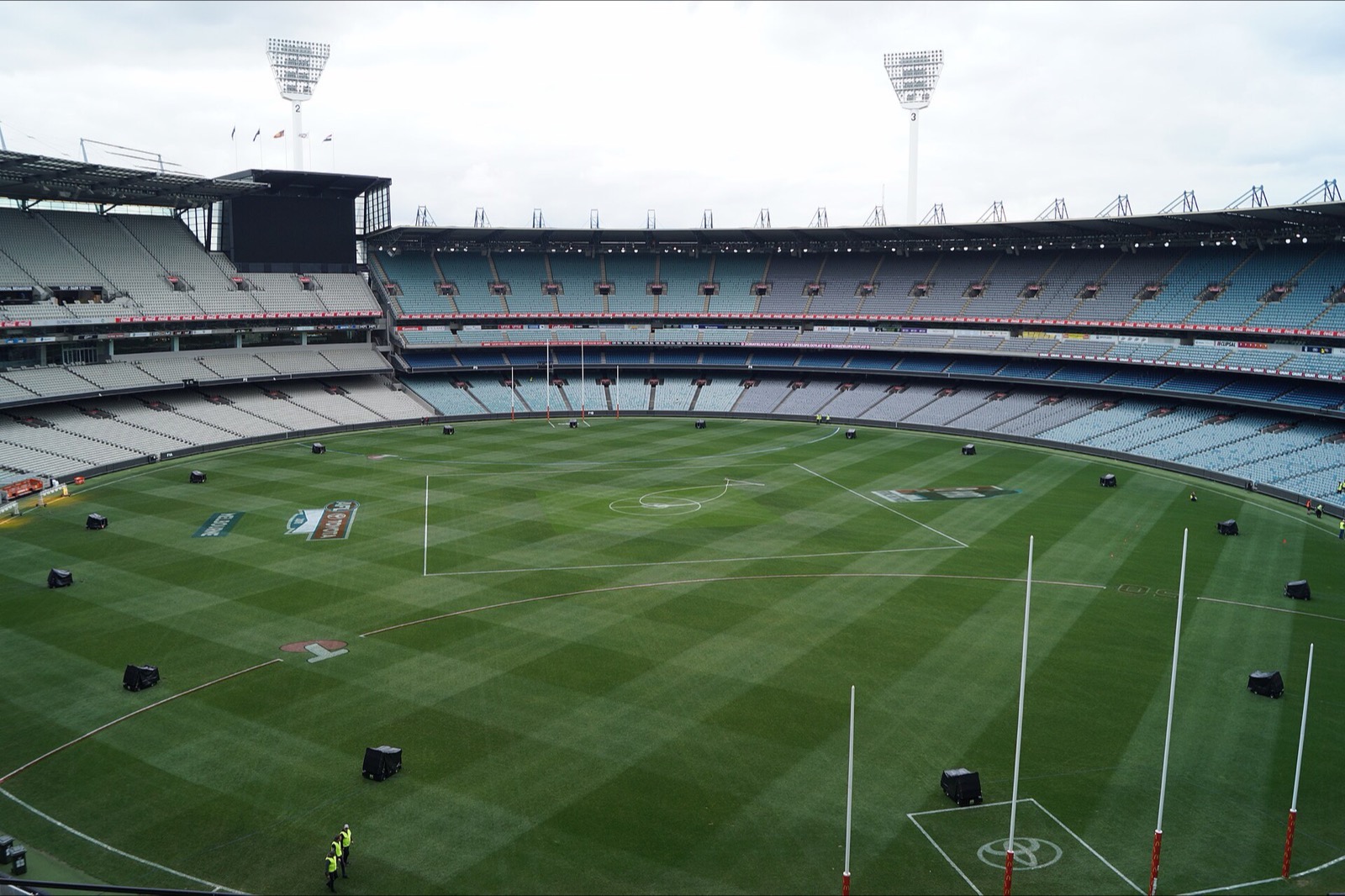
Brisbane Lions do not yet know if they will have their best player on the ground on Saturday. That is not a selection question the coach gets to answer — it is a Tribunal question, and as of this article’s publication, it has not been answered. Somewhere between now and the first bounce of the 2026 AFL Grand Final, three jurors will decide whether Lachie Neale’s spotless 320-game record is enough to overturn a one-match ban for a strike nobody disputes actually happened.
Everything else about Saturday is settled. Brisbane and Fremantle will meet at the Melbourne Cricket Ground to decide the premiership, both having got there through preliminary finals that are already being talked about as classics in their own right. What isn’t settled is whether Brisbane’s bid for an unprecedented modern three-peat starts with or without the two-time Brownlow medallist who helped win the last two.
The match: Brisbane Lions v Fremantle Dockers, Saturday at the MCG
The fixture itself is straightforward. Brisbane finished the home-and-away season strongly enough to earn a double chance, then beat Hawthorn in a preliminary final for the right to play in a fourth consecutive Grand Final. Fremantle went through Sydney in the other semi for just the second Grand Final appearance in the club’s history.
| Detail | |
|---|---|
| Teams | Brisbane Lions v Fremantle Dockers |
| Date | Saturday, 26 September 2026 |
| Venue | Melbourne Cricket Ground (MCG), Melbourne |
| Brisbane’s path | Def. Hawthorn by 9 points in the preliminary final |
| Fremantle’s path | Def. Sydney by 12 points in the preliminary final |
| At stake for Brisbane | A third consecutive premiership — the club’s sixth overall |
| At stake for Fremantle | The club’s first premiership in its history |
Sources: AFL.com.au preliminary final match reports.
Brisbane has been here before, repeatedly. Fremantle has been here exactly once, in 2013, and lost. That gap — a club chasing history against a club chasing its first flag, full stop — is the actual shape of Saturday’s contest, underneath the Neale subplot.
Will Lachie Neale actually play?
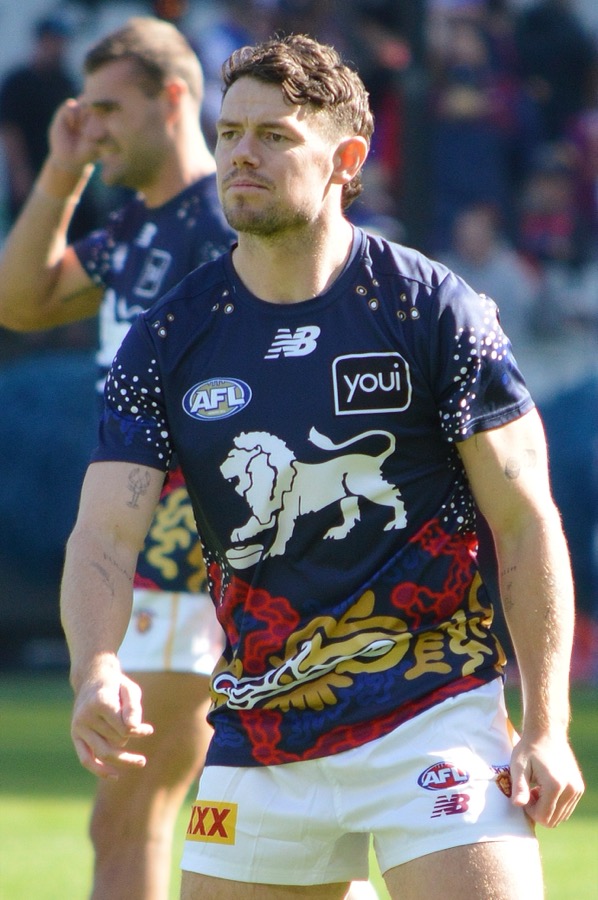
Here is what actually happened, stripped of the noise. Late in the first quarter of Saturday’s preliminary final, vision showed Jack Ginnivan wrestling with Brisbane forward Eric Hipwood off the ball. Neale jogged over and floored Ginnivan with a left-handed strike to the stomach. The AFL’s Match Review Officer graded it intentional conduct, medium impact, body contact — and under the league’s own rules, a strike graded medium impact carries a one-match minimum. Brisbane confirmed it would appeal within three minutes of the finding.
Context worth having: nine players have been suspended for off-the-ball strikes this season alone, after the AFL explicitly warned in February that contact to the chest or stomach would “usually” be graded medium impact and carry a week’s ban. Just last week, Adelaide’s Max Michalanney failed to overturn an almost identical charge at the Tribunal. Brisbane knows the precedent is not in its favour — it is arguing that Neale’s record is the exception, not that the incident didn’t happen.
How Brisbane survived an all-time classic to get here
Brisbane’s preliminary final against Hawthorn is the one people will still be talking about at the pub in ten years. Brisbane led by as much as 28 points in the final term — and then Hawthorn, with nothing to lose, produced twelve goals between the two sides in the last quarter alone.
The smallest player on the ground very nearly ended it. Nick Watson, Hawthorn’s diminutive forward, kicked his fifth and sixth goals of the night to put the Hawks in front with the clock running down — a genuinely spellbinding individual performance in a losing cause. Brisbane co-captain Hugh McCluggage, who has battled his own history of missed set shots, steadied twice: first to retake the lead with four and a half minutes left, then again with 36 seconds on the clock after Hawthorn defender Jarman Impey was paid a contentious free kick for insufficient disposal in front of goal. Kai Lohmann, who had already kicked a third-quarter hat-trick, sealed it with his fifth goal of the night after the siren.
| Detail | Figure |
|---|---|
| Margin | 9 points |
| Brisbane’s biggest lead | 28 points (fourth quarter) |
| Goals scored in the final term (both teams) | 12 |
| Attendance | 97,835 at the MCG |
| Brisbane’s goalscorer of the night | Kai Lohmann — 5 goals, including the sealer after the siren |
| Hawthorn’s goalscorer of the night | Nick Watson — 6 goals |
Source: AFL.com.au preliminary final report.
Watson will get the highlight reels, fairly — a career-high six goals in a preliminary final from the shortest man on the ground is the kind of performance that gets replayed for years, even in a loss. But the more complete game arguably belonged to teammate Josh Ward, the Hawks’ No. 7 draft pick: 25 disposals, 11 clearances (the most of anyone on the ground), nine tackles and four goal assists, in a losing side. It is the sort of stat line that wins best-afield honours in most finals that aren’t decided by a last-minute free kick and an after-siren goal.
The finish had a second life after full-time. Umpires had to take evasive action as bottles were thrown from the stands following the result, and the AFL has since promised lengthy bans for anyone identified. It was, in the words of one report, louder inside the ground than most Grand Finals actually are — which, with 97,835 people packed into the MCG for a preliminary final, is a genuinely remarkable claim.
Hawthorn coach Sam Mitchell, visibly shaken in his press conference afterward, declined to single out the Impey free kick when reporters pushed him on it — pointing instead to two earlier decisions in the same passage of play.
I haven’t rewatched it. Maybe it was there. It’s probably not the one I was focused on. A couple leading up to it, and other key moments in the game. I’m sure the umpires will assess how they performed in the game in key moments.
Sam Mitchell, Hawthorn coach, post-match press conference
On the bottle-throwing itself, Mitchell was direct: he understood the emotion, but said it “shouldn’t happen.” “Part of me wanted to break down in tears. Part of me wanted to scream with rage,” he said of watching the finish from the coach’s box. “But how it manifests itself we shouldn’t be throwing things on the field.”
Fremantle's comeback: down 28, through to just their second Grand Final
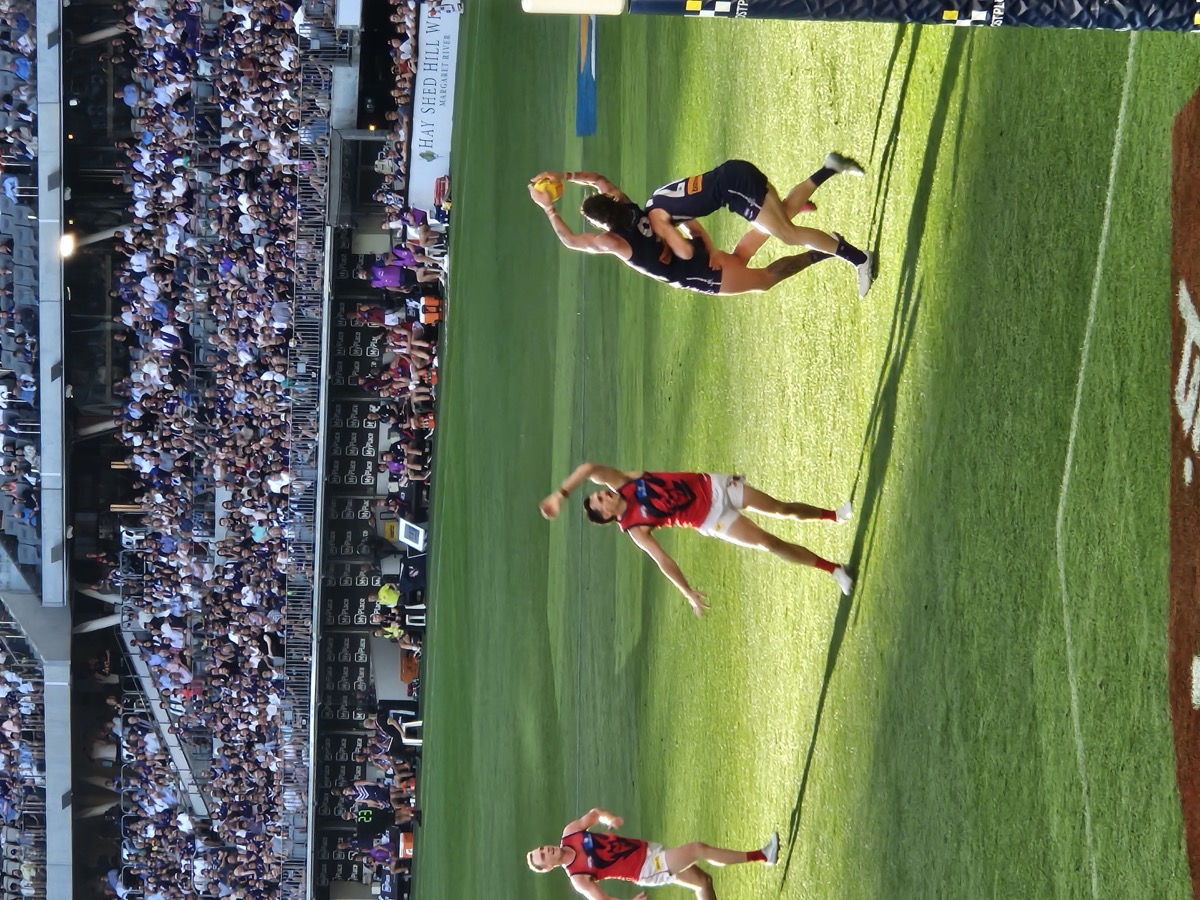
Fremantle’s route to the Grand Final has a strange, deliberate symmetry to it. In round 18 this season, Sydney led the Dockers by 22 points at half-time before losing by 38. In the preliminary final, history repeated itself almost exactly: Sydney led by 28 points midway through the third term, and still lost.
Fremantle’s comeback was built on the back of five unanswered final-quarter goals and a complete territorial takeover — 23 inside-50s to 6, 12 clearances to 5, and 49 contested possessions to 27 in the last term alone. Mason Cox, a name Collingwood fans will remember from his own preliminary final heroics in a different jumper, marked and calmly slotted the goal that put the Dockers in front for good.
| Detail | Figure |
|---|---|
| Margin | 12 points |
| Sydney’s biggest lead | 28 points (third quarter) |
| Final-term inside-50s | Fremantle 23 – Sydney 6 |
| Final-term contested possessions | Fremantle 49 – Sydney 27 |
| Fremantle’s leading disposal winner | Andrew Brayshaw — 29 disposals |
| Sydney’s leading disposal winner | Errol Gulden — 36 disposals, 766m gained |
Source: AFL.com.au preliminary final report.
Sydney’s task was made harder before a ball was bounced. Five players — Isaac Heeney, Nick Blakey, Chad Warner, Riley Bice and James Jordon — were suspended by their own club for the rest of the season in August, after being linked to a Victoria Police investigation into an alleged incident at the team’s hotel following a match against Essendon. To be precise about what is and isn’t established: no charges have been laid, none of the players has been formally interviewed by police according to the club, and the Swans themselves have said it is not suggested any of the five are accused of assault. The suspension was the club’s own sanction for a breach of standards, separate from the ongoing police matter, and it cost Sydney five first-choice players — plus captain Callum Mills, already out with a ruptured ACL — for the remainder of their season, including the preliminary final.
Fremantle, coached by Justin Longmuir, made what turned out to be the decisive tactical call of the night by shifting Shai Bolton deep into attack to spark a stalling forward line. It is Fremantle’s second Grand Final appearance ever, following a loss in 2013 — and their first shot at a maiden premiership.
That first appearance carries its own small connection to this year’s finals series. Fremantle’s 2013 Grand Final loss was to Hawthorn, 11.11 (77) to 8.14 (62) at the MCG — the very club Brisbane had to eliminate in this year’s preliminary final to set up Saturday’s match-up. Fremantle won’t face the team that beat them in 2013, but that team is the reason their 2026 opponent is Brisbane rather than someone else.
Just how big is Brisbane's three-peat bid?
Strip away Saturday’s specific drama and there is a genuinely historic number sitting underneath it. If Brisbane wins, it will be the club’s third consecutive premiership — and only the second time in the club’s own history it has managed that feat, after the Lions’ famous 2001–2003 three-peat under Leigh Matthews.
| Year | Result | Margin | Attendance |
|---|---|---|---|
| 2024 | Brisbane def. Sydney | 60 points (18.12–120 to 9.6–60) | 100,013 |
| 2025 | Brisbane def. Geelong | 47 points (18.14–122 to 11.9–75) | 100,022 |
| 2026 | v Fremantle — Saturday | — | TBD |
2024 attendance was a record for an AFL match between two non-Victorian teams. Sources: Wikipedia's 2024 and 2025 AFL Grand Final pages.
Brisbane has not just won its last two Grand Finals — it has won them comfortably. Neither margin has been within reach in the final term.
No team has won three consecutive AFL premierships since Brisbane itself did it in 2001–2003. Collingwood holds the outright record with four straight between 1927 and 1930, in an era of the game few current fans would recognise. Will Ashcroft, still only in his early twenties, has won the Norm Smith Medal for best afield in both of Brisbane’s last two Grand Finals — a genuine back-to-back that has largely been overshadowed by the bigger team story around him.
A smaller footnote from the same week: Nick Daicos wins the Brownlow
What actually is the AFL Grand Final?
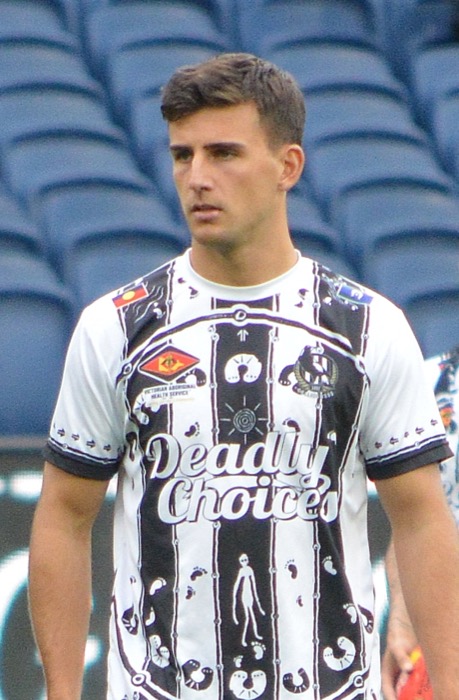
For anyone arriving at this without a lifetime of context: the Grand Final has been played every year since 1898, with the sole exception of 1924, and has been held at the MCG on all but eleven of those occasions. It is traditionally staged on the last Saturday of September and regularly draws a crowd beyond 100,000 — a scale most sports outside Australia simply don’t have a domestic equivalent for. The winning club receives the premiership cup and flag; the best player on the ground on the day receives the Norm Smith Medal, a separate honour from the league-wide Brownlow.
The game carries enough weight in Australian sport to have collected its own set of nicknames over 128 years — “the Granny,” “the Big Dance,” and, more evocatively, “the One Day in September.” It has been broadcast nationally by the Seven Network in recent years, with a pre-match entertainment slot that has become an event of its own — last year’s 2025 decider opened with Snoop Dogg, Tash Sultana and Baker Boy performing before a ball was bounced. Whatever else changes about the two teams involved from year to year, that scale of production is now simply part of what the day is.
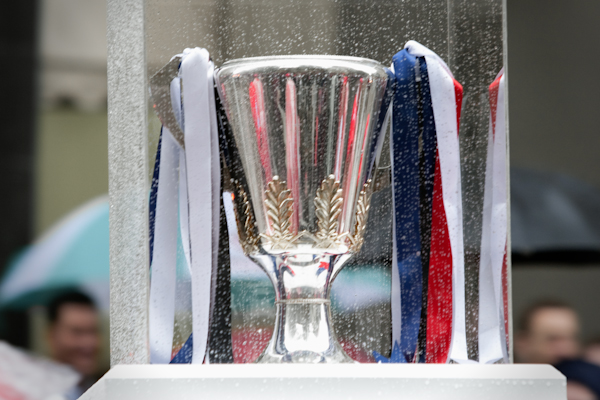
Carlton and Collingwood have won the most premierships in VFL/AFL history, with 16 each. Every current club except Gold Coast has played in at least one Grand Final. Saturday’s game will be the 131st in the competition’s history — a genuinely long, continuous thread that Brisbane is trying to write a rare chapter into, and that Fremantle is trying to join for the first time.
Final Verdict
Take the Neale question out of it entirely, and Saturday is already a compelling Grand Final on the merits: a club with the game’s best recent record against a club that has never won the thing at all, decided at the ground that has hosted almost every one of these games since 1898. Put the Neale question back in, and it becomes something sharper — a genuine possibility that the most decorated player of Brisbane’s current era plays no part in the game that would complete a three-peat only his own club has matched this century.
Our read: don’t treat any confident prediction about the Tribunal outcome you see this week as more than a guess dressed up as analysis — the exemplary-record clause is real, but it has a mixed recent record, and Brisbane knows it. What isn’t in doubt is the scale of what both clubs are actually playing for on Saturday: history that only repeats once a century, for one side, and a first that’s never happened at all, for the other.
Frequently asked
- When and where is the 2026 AFL Grand Final?
- Saturday, 26 September 2026, at the Melbourne Cricket Ground — the traditional home of the Grand Final, which it has hosted every year but eleven since the fixture began in 1898.
- Who is playing in the 2026 AFL Grand Final?
- Brisbane Lions and Fremantle Dockers. Brisbane beat Hawthorn by nine points, 20.11 (131) to 19.8 (122), in the first preliminary final. Fremantle beat Sydney by 12 points, 12.11 (83) to 10.11 (71), in the second, completing a comeback from 28 points down.
- Will Lachie Neale play in the Grand Final?
- Unresolved as of this article’s publication. The AFL’s Match Review Officer handed Neale a one-match ban for an off-the-ball strike on Hawthorn’s Jack Ginnivan during the preliminary final. Brisbane is appealing at the Tribunal, arguing his clean 320-game record meets the "exceptional and compelling circumstances" clause. The hearing’s outcome will decide whether he plays.
- Has Brisbane won back-to-back premierships before this?
- Yes. Brisbane beat Sydney by 60 points in the 2024 Grand Final and Geelong by 47 points in 2025 — their fourth and fifth premierships overall. A win on Saturday would be a third consecutive flag, matching the club’s own 2001–2003 three-peat.
- Has Fremantle won an AFL premiership before?
- No. Saturday is only Fremantle’s second Grand Final appearance in the club’s history, after a loss in 2013. The Dockers have never won the premiership.