The Modi birthday celebrations that began on Thursday, 17 September 2026 were not confined to party offices. In at least four states, instructions reached classrooms, college campuses and anganwadi centres, and in most cases came with a requirement to photograph the result and upload it. The Prime Minister turned 76; the campaign built around it runs for a month.
What follows separates three things that have been reported together and are not the same: what a state government formally ordered, what an Opposition MP has alleged about one institute, and what people did entirely of their own accord.
What Rajasthan actually ordered
This is the most documented of the instructions, because the order is attributable to a named official and a named department.
| Element | Detail |
|---|---|
| Issued by | Commissionerate of College Education |
| Named official | College Education Commissioner Nathmal Didel |
| Applies to | All government and private colleges across Rajasthan |
| Programme name | ‘Viksit Bharat–Jan Seva Abhiyan’ |
| Duration | Month-long, comprising 12 activities |
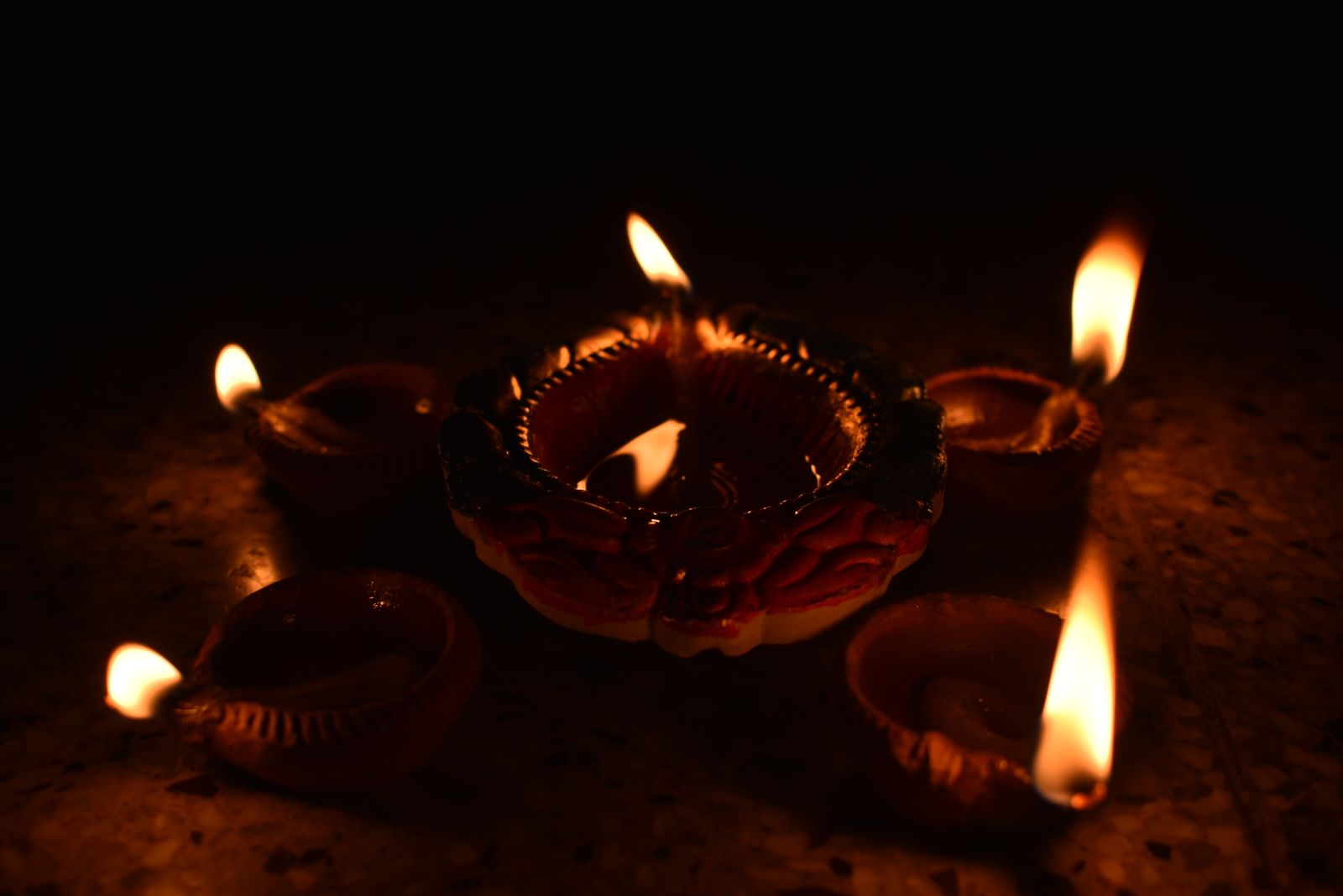
| 17 September | ‘Ashirwad Ka Diya’ — lamps lit at dusk by students, scheme beneficiaries and the public |
| 2 October | Community service |
| 1–15 October | ‘Seva First’ innovation challenge competitions |
| Afterwards | Submission of compliance reports |
Details as reported by The Hindu on 18 September 2026. The Planning Department’s order additionally required monitoring through a dedicated portal, with district administrations and departments uploading programme details, photographs and videos.
Two details in that order are worth separating from the politics. The first is the compliance report, which converts an invitation into an obligation with a paper trail. The second is the portal: photographs and videos uploaded by district administrations make participation measurable, and anything measurable in a government system tends to become mandatory in practice whether or not the text says so.
There was a reported consequence nobody appears to have planned for. Some private colleges in Jaipur asked male staff to stay on to light the lamps after female teachers said they could not remain on campus until late evening.
The same instruction, several states
| Place | Who was instructed | Proof required |
|---|---|---|
| Rajasthan | All government and private colleges | Compliance reports; photos and videos to a portal |
| Delhi | At least 75 government ‘CM Shri’ schools; teachers also asked to visit Class 10 toppers’ homes with diyas | Videos recorded and uploaded to Google Drive |
| Bihar | Principals, headmasters and teachers across all 38 districts, lamps lit 6–7pm | Photos and videos sent via WhatsApp |
| Madhya Pradesh | Anganwadi workers, allegedly directed to light diyas and record videos praising the PM and schemes | Videos; reported warnings of action for non-compliance |
Compiled from reporting by Scroll, The Wire, ETV Bharat and others. The Madhya Pradesh row is reported as an allegation by workers and is labelled as such. A figure of 80,000+ schools in West Bengal also appears in reporting but is excluded here — see the omissions section.
Light the lamp. Photograph it. Upload the photograph.
The common thread across four states
The documentation requirement is the part that distinguishes this from an ordinary celebration. A lamp lit voluntarily leaves no record. A lamp lit and uploaded to a departmental portal creates one, and a record of who did not comply.
IIM Jammu: what is established and what is alleged
This is the allegation that has travelled furthest, and it needs splitting carefully, because one half is confirmed and the other is not.
| Claim | Status |
|---|---|
| A lamp-lighting ceremony was held at IIM Jammu on 17 September | Confirmed — publicised by the institute itself |
| Director Prof. B.S. Sahay presided; Jammu East MLA Yudhvir Sethi attended | Confirmed by the same institutional publicity |
| Students were told attendance was mandatory | Alleged — based on a screenshot shared by an MP |
| Absent students face a ₹500 fine unless they explain in writing | Alleged — not confirmed by IIM Jammu |
| Exemption only on medical grounds with a Sanjeevni note recommending bed rest | Alleged — from the same purported notice |
| IIM Jammu’s response | None. Telegraph Online says it approached the director and other officials |
The allegations come from Syed Naseer Hussain, Congress Rajya Sabha MP from Karnataka and AICC observer for Jammu and Kashmir, who published what he described as a notice from the institute’s student council. The notice is attributed to the student council rather than the administration, a distinction that matters and that the institute has not clarified.
Hussain’s own framing, posted on X, was this: “Why should attendance at PM Modi’s birthday celebration be mandatory for students? Is this an academic responsibility at an IIM or has PM Modi’s publicity been brought into the campus as a compulsory exercise?” He added that educational institutions “should nurture independent minds, not compel students to attend political leaders’ celebrations or threaten them with penalties.”
Two campaigns, similar names, different owners
Much of the confusion in coverage of this story comes from a naming collision. There are two programmes running simultaneously and they belong to different institutions.
| Campaign | Run by | Period | Marks |
|---|---|---|---|
| ‘Seva Sankalp Abhiyan’ | Bharatiya Janata Party | 17 September – 17 October 2026 | 76th birthday and 25 years since becoming Gujarat CM in October 2001 |
| ‘Viksit Bharat–Jan Seva Abhiyan’ | Rajasthan state government | Month-long from 17 September | Described officially as promoting public service and good governance |
The Delhi version, ‘Seva Sankalp Abhiyan 2026 – Jan Seva Hi Prabhu Seva Hai’, is described as jointly organised by the Delhi BJP and the Delhi Government, and comprises 13 initiatives. It was inaugurated by BJP National President Nitin Nabin.
There is a related point worth noting about the calendar. The community service day in the Rajasthan programme falls on 2 October, which is Gandhi Jayanti — already a national day associated with public service and cleanliness drives.
The voluntary half of the same campaign
None of the above describes what Ranbir Kapoor and Alia Bhatt did, and conflating the two would be the same error the coverage keeps making in reverse.
Alia Bhatt announced on 17 September that she and Ranbir Kapoor would refurbish 20 Mumbai schools, on the recommendations of the Brihanmumbai Municipal Corporation, in support of the campaign. “The spirit of #SevaSankalpAbhiyaan reflects a wonderful vision of collective action and giving back,” she wrote. “To mark this day and support the cause, Ranbir and I are pledging to refurbish 20 schools as per the recommendations of @mybmc, helping create brighter, better-equipped spaces for our children to learn and thrive.”
The distinction that runs through this entire story is not between praise and criticism of the Prime Minister. It is between participation that was chosen and participation that was instructed, documented and reported upward.
What the government and the party say
The official characterisation is that this is a service campaign rather than a personality campaign. College Education Commissioner Nathmal Didel said the month-long programme follows guidelines issued by the Planning Department, and that “the campaign is aimed at promoting public service, social concern and good governance.”
Rajasthan Chief Minister Bhajanlal Sharma and state BJP president Madan Rathore led service activities and lamp-lighting in the state. Sharma said the Prime Minister’s life had been dedicated to public and national service, and that his leadership had strengthened India’s journey towards self-reliance, good governance and the goal of a developed nation. The campaign’s published components — blood donation camps, cleanliness drives, welfare outreach — are consistent with that description.
The Opposition’s case is not that service activities are objectionable. Leader of the Opposition in Rajasthan, Tika Ram Jully, put it this way: “The Bharatiya Janata Party wants to hide its colossal failures through such extravagant events. This despite the common people and vulnerable sections grappling with rising inflation and difficult circumstances.”
The People’s Union for Civil Liberties went further, calling the order “authoritarian” and saying the government had crossed “all limits of sycophancy”. PUCL national president Kavita Srivastava said: “Celebrating the birthdays of living, active politicians is a form of sycophancy that imprisons students in the archaic mindset of the feudal era. Institutions of higher learning should foster independent thinking and scientific temper among students.” State president Anant Bhatnagar said the party was making college students into “submissive subjects”.
We have examined the institutional side of this government’s record separately, using only official data and court findings, in our assessment of twelve years measured against the government’s own numbers. The pattern described there — strong delivery, weaker procedural checks — is visible in miniature here.
What we could not verify
Final Verdict
Stripped of the noise, the Modi birthday celebrations raise one narrow question that does not depend on what anyone thinks of the Prime Minister: should a state education department instruct colleges to hold events for a serving politician’s birthday and then require them to prove they did?
The activities themselves are unobjectionable in isolation. Blood donation, cleanliness drives, school refurbishment and community service on Gandhi Jayanti are good things, and Ranbir Kapoor and Alia Bhatt refurbishing twenty schools is straightforwardly welcome. The difficulty is structural rather than moral. Once a compliance report is attached, a celebration becomes an administrative requirement, and an institution that does not participate has created a record of not participating. That is true regardless of which party is in office and which leader is being honoured.
On IIM Jammu specifically, the responsible position is to wait. The ceremony happened and the institute publicised it. The ₹500 fine is a documented allegation by a named parliamentarian that the institute has had two days to address and has not. A one-line clarification would settle it either way, and its absence is currently doing more damage to the institute than a denial would.
Frequently asked
- What did the Rajasthan government order colleges to do?
- The Commissionerate of College Education instructed all government and private colleges in Rajasthan to organise lamp lighting on 17 September, community service on 2 October and ‘Seva First’ innovation challenge competitions from 1 to 15 October, followed by submission of compliance reports. The month-long programme comprises 12 activities under the name ‘Viksit Bharat–Jan Seva Abhiyan’.
- Did IIM Jammu really fine students for missing the event?
- That is an allegation, not an established fact. Congress Rajya Sabha MP Syed Naseer Hussain published what he described as a notice from the institute’s student council, stating that absent students must explain in writing or pay ₹500. IIM Jammu has not responded and The Telegraph reported it could not reach the director or other officials. The ceremony itself is confirmed — the institute publicised it, with Director Prof. B.S. Sahay presiding.
- What is the difference between Seva Sankalp Abhiyan and Viksit Bharat–Jan Seva Abhiyan?
- They are different campaigns run by different bodies. ‘Seva Sankalp Abhiyan’ is the BJP’s month-long party campaign, running 17 September to 17 October 2026, marking the Prime Minister’s 76th birthday and 25 years since he became Gujarat chief minister in October 2001. ‘Viksit Bharat–Jan Seva Abhiyan’ is the Rajasthan state government’s programme. Both names are correct and much coverage conflates them.
- Which states asked schools to light lamps for Modi’s birthday?
- Reporting documents instructions in Rajasthan (all colleges), Delhi (at least 75 government CM Shri schools, with teachers also asked to visit Class 10 toppers’ homes), Bihar (principals and teachers across all 38 districts, lamps lit between 6pm and 7pm) and Madhya Pradesh (anganwadi workers, reported as an allegation). Most required photographs or videos as proof.
- What did Ranbir Kapoor and Alia Bhatt pledge?
- They pledged to refurbish 20 Mumbai schools on the recommendations of the Brihanmumbai Municipal Corporation, announced by Alia Bhatt on 17 September in support of the campaign. This was voluntary private philanthropy and involved no institutional instruction or compliance requirement.
- What has the government said in response to the criticism?
- College Education Commissioner Nathmal Didel said the programme follows Planning Department guidelines and that the campaign “is aimed at promoting public service, social concern and good governance”. Rajasthan Chief Minister Bhajanlal Sharma said the Prime Minister’s life had been dedicated to public and national service. No withdrawal of the order has been reported.