Any list of the most powerful people in India runs into the same problem before it starts: power has no unit. You cannot weigh a Home Minister against a central bank governor the way you can weigh two batting averages. So the useful question is not who tops some imaginary scale, but which offices actually decide things in 2026 — and whether the person named in each seat is who you think it is.
That second part matters more than it sounds. India has had a new Chief Justice since November 2025 and a new Reserve Bank governor since December 2024, and a large amount of published material on this subject is quietly out of date.
India’s ten most powerful offices in 2026
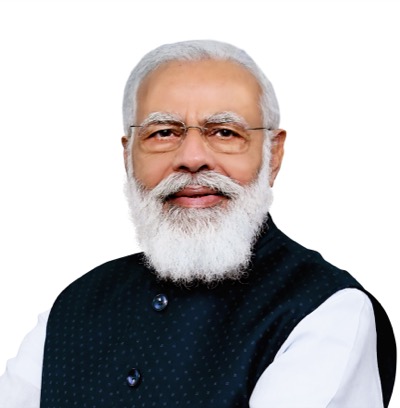
No. 1
Narendra Modi
Prime Minister of India
Began a third consecutive term as Prime Minister on 9 June 2024, heading a Council of Ministers of 72 including himself. Ranked first in The Indian Express IE100 for the twelfth year running — the single longest unbroken run at the top in that list’s history.
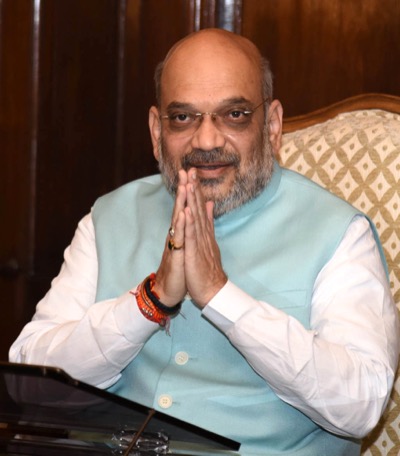
No. 2
Amit Shah
Union Minister of Home Affairs
Took charge of Home Affairs on 1 June 2019 and has held it since. The ministry controls the central armed police forces, internal security, centre–state administrative relations and the Union Territories. Ranked second in the IE100 for the twelfth consecutive year, alongside Modi.
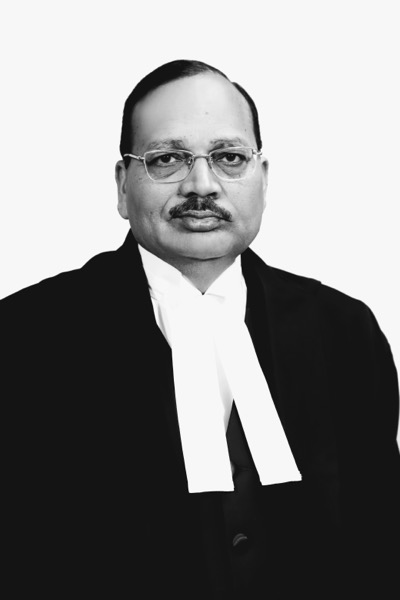
No. 3
Justice Surya Kant
53rd Chief Justice of India
Sworn in as Chief Justice on 24 November 2025, with a tenure running to 9 February 2027. The office heads a branch that has, within recent memory, struck down a government financing scheme in its entirety — the electoral bonds judgment of February 2024 was decided 5–0 by a Constitution Bench. That is the reach this seat carries regardless of who occupies it.
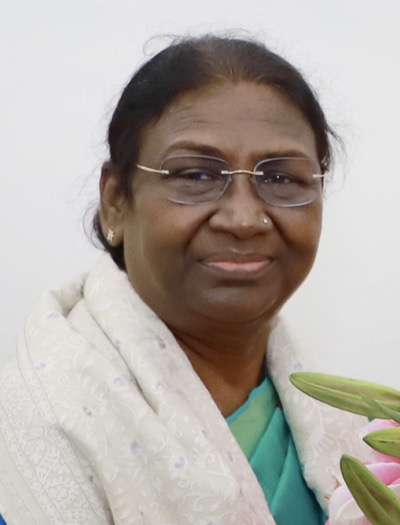
No. 4
Droupadi Murmu
15th President of India
Took office on 25 July 2022, completing four years in July 2026. She is the first President from a tribal community and the second woman to hold the post after Pratibha Patil. The executive power of the Union is formally vested in the President under Article 53 — exercised, by convention, on the advice of the Council of Ministers. That gap between formal and operative authority is why the office sits fourth here rather than first.
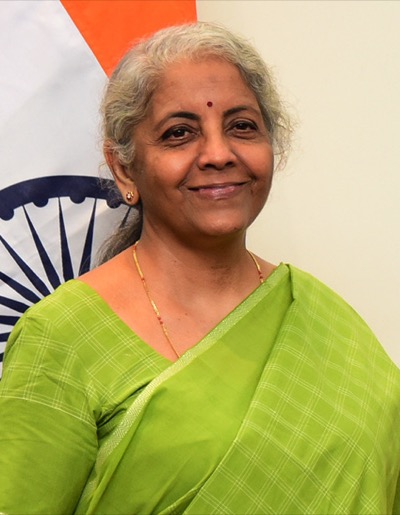
No. 5
Nirmala Sitharaman
Union Minister of Finance and Corporate Affairs
Took charge of Finance on 31 May 2019. The portfolio sets the Union Budget, tax policy and the borrowing programme, and holds Corporate Affairs alongside it. Gross GST collections reached roughly ₹22 trillion in FY 2025–26, an increase of about 8.3 per cent on the previous year.
U.S. Department of State · Public domain
No. 6
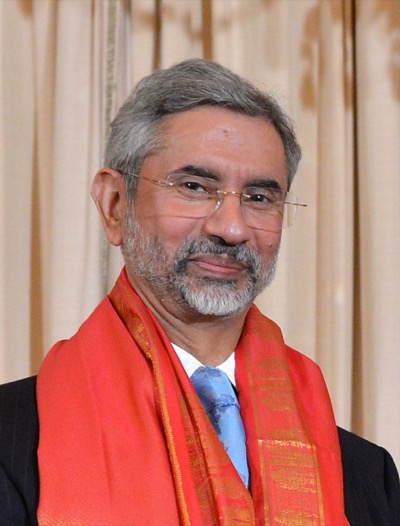
S. Jaishankar
Minister of External Affairs
External Affairs Minister since 30 May 2019, and a career diplomat before that — he was Foreign Secretary, and ambassador to both China and the United States. The portfolio has carried unusual weight through a period in which India has had to hold positions on the Iran conflict, Russian energy and US trade policy simultaneously.
No. 7
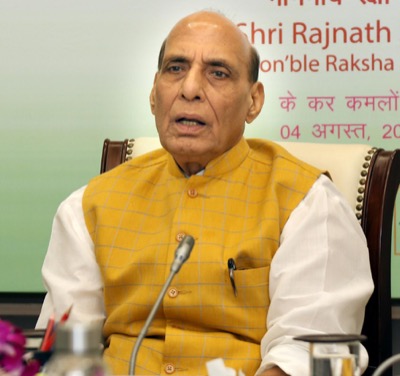
Rajnath Singh
Union Minister of Defence
Defence Minister and a former Union Home Minister and BJP national president. The ministry runs one of the largest standing militaries in the world and the defence procurement programme that goes with it.
U.S. Department of State · Public domain
No. 8
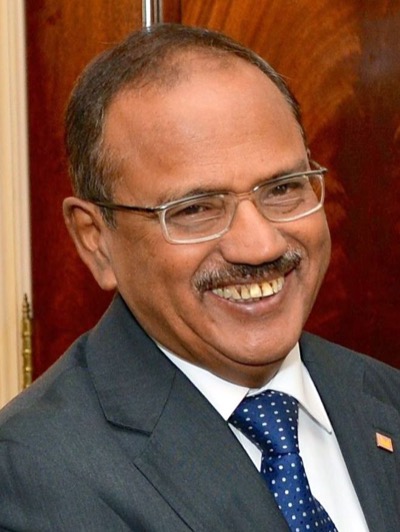
Ajit Doval
National Security Advisor
National Security Advisor and head of the National Security Council secretariat. The post is not a constitutional one and carries no ministry, which is precisely what makes it interesting: its influence derives from proximity to the Prime Minister and from coordinating the intelligence agencies rather than from any statute.
No. 9
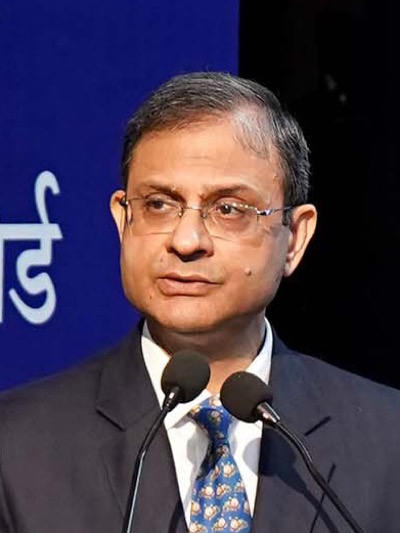
Sanjay Malhotra
26th Governor, Reserve Bank of India
Took charge on 11 December 2024 for a three-year term, succeeding Shaktikanta Das. A 1990-batch IAS officer of the Rajasthan cadre, he was Revenue Secretary in the Finance Ministry before the appointment. The governor sets the policy rate that prices every loan in the country; retail inflation for FY 2025–26 came in at 2.1 per cent, the lowest in the current series.
No. 10
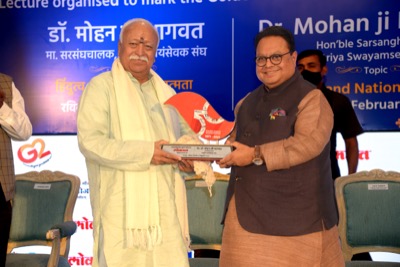
Mohan Bhagwat
Sarsanghchalak, Rashtriya Swayamsevak Sangh
The sixth Sarsanghchalak of the RSS, in post since 21 March 2009 — the longest tenure of anyone on this list by a wide margin. He holds no government office and stands for no election, which is exactly why the seat belongs here: it is the clearest case in Indian public life of influence that is entirely extra-constitutional.
Why Ambani and Adani are not in the ten
The obvious objection to the list above is that it contains no businessmen, and that a man worth almost a hundred billion dollars plainly has more power than, say, a defence minister. It is a fair objection, and the answer is that economic power and institutional power are different axes. Ranking them against each other produces a list that means nothing, because the comparison has no common term.
| Rank | Name | Net worth | Primary holding |
|---|---|---|---|
| 1 | Mukesh Ambani | $99.7 billion | Reliance Industries |
| 2 | Gautam Adani | $63.8 billion | Adani Group |
| 3 | Savitri Jindal | $39.1 billion | O. P. Jindal Group |
| 4 | Lakshmi Mittal | $31.0 billion | ArcelorMittal |
| 5 | Shiv Nadar | $30.9 billion | HCL Technologies |
Figures from Forbes’s 2026 ranking, published 10 March 2026 with a valuation snapshot dated 1 March 2026. Ambani’s figure rose from $92.5 billion in 2025, with Reliance shares up about 12 per cent over the year. Savitri Jindal is India’s wealthiest woman.
One number does bridge the two lists. Ambani and Adani have between them committed a reported $210 billion to build artificial-intelligence infrastructure across India. Capital at that scale shapes national industrial policy as surely as a ministry does — which is an argument for reading the two lists side by side, not for merging them into one.
What the IE100 says, and what we could not check
The Indian Express IE100 is the most established annual ranking of powerful Indians, now in its twelfth year. Two things about the 2026 edition are verifiable: Narendra Modi and Amit Shah hold the first two places for the twelfth consecutive year, and nine of the top ten are unchanged from 2025. Rahul Gandhi and Mamata Banerjee are the only two leaders from outside the NDA to appear in the top twenty.
| Rank | Name | Note |
|---|---|---|
| 1 | Narendra Modi | Twelfth consecutive year at the top |
| 2 | Amit Shah | Twelfth consecutive year in second place |
| 74 | Gautam Gambhir | Highest-ranked sportsperson on the list |
| 75 | Virat Kohli | — |
| 82 | Jasprit Bumrah | — |
Ranks 3 to 10 of the 2026 IE100 are deliberately absent from this table. See the note below.
An omission you can see is worth more than a number you cannot check.
Who else has a claim
Several offices were considered for this list of the most powerful people in India and left out, and it is worth saying which, because a list of ten is mostly a set of decisions about what to exclude.
| Office or figure | Why it was left out |
|---|---|
| Chief Election Commissioner | Enormous authority, but exercised in concentrated bursts around elections rather than continuously |
| Cabinet Secretary | The senior-most civil servant, but the role is executive coordination rather than policy authorship |
| Chief of Defence Staff | Operational rather than policy-setting; the Defence Ministry seat carries the budget |
| Leader of the Opposition | Real constitutional standing on appointment panels, but no executive power |
| State chief ministers | Several command larger populations than most countries; excluded only because this list is about national office |
| Mukesh Ambani, Gautam Adani | Economic rather than institutional power — covered in their own section above |
This is a judgement about scope, not a ranking of these figures against those in the list.
Final Verdict
The honest summary of the most powerful people in India in 2026 is that the top of the structure has been unusually stable and the middle has not. Modi and Shah have held the first two places in the country’s best-known ranking for twelve straight years. Below them, two of the most consequential seats in the country changed hands recently: the Chief Justice in November 2025 and the Reserve Bank governor in December 2024. Anyone working from a list written two years ago now has two names wrong.
The second point is about method rather than personnel. There is no defensible way to produce an objective ranking of power, and every publication that offers one is making an editorial judgement whether or not it admits as much. We have admitted it. What we have not done is let that licence extend to the facts: every office, date and figure above was checked against a government, court or Forbes source, and where something could not be checked — the middle of the IE100 — the gap is left open rather than filled with a plausible guess.
Read the list as what it is: an argument about which seats decide things in India, with the evidence attached so you can disagree with the ordering without having to doubt the underlying facts.
Frequently asked
- Who is the most powerful person in India in 2026?
- Prime Minister Narendra Modi, who began a third consecutive term on 9 June 2024. He has been ranked first in The Indian Express IE100 list of most powerful Indians for twelve consecutive years, with Union Home Minister Amit Shah second over the same period.
- Who is the Chief Justice of India in 2026?
- Justice Surya Kant, the 53rd Chief Justice of India. He was sworn in on 24 November 2025 and his tenure runs to 9 February 2027.
- Who is the Governor of the Reserve Bank of India in 2026?
- Sanjay Malhotra, the 26th Governor, who took charge on 11 December 2024 for a three-year term. A 1990-batch IAS officer of the Rajasthan cadre, he was Revenue Secretary in the Finance Ministry before the appointment and succeeded Shaktikanta Das.
- Who is the richest person in India in 2026?
- Mukesh Ambani, chairman of Reliance Industries, at $99.7 billion on the Forbes 2026 list, which carries a valuation snapshot dated 1 March 2026. Gautam Adani was second at $63.8 billion on that same snapshot, though real-time trackers showed him considerably higher later in the year.
- Why are Mukesh Ambani and Gautam Adani not in the top ten?
- Because economic power and institutional power are different things and ranking them against each other produces a meaningless ordering. This guide covers offices with constitutional or statutory authority over national policy. India’s wealthiest are covered in a separate section with dated Forbes figures.
- Is this ranking official?
- No. There is no official ranking of powerful Indians and no objective way to measure power. The ordering in this guide is an editorial judgement, stated openly. Every office, date and figure attached to each name is verified against a government, court or Forbes source.