“Haven’t signed any bond that says we won’t protest. We will hit the streets again.” Abhijeet Dipke, founder of the Cockroach Janta Party (CJP), posted that on Sunday, hours after a Special Executive Magistrate in Delhi released him and two colleagues on a bond to keep the peace for one year.
The three had been taken off an Air India flight from Mumbai on Saturday, 10 October, before the protest they had called at Jantar Mantar against Chief Election Commissioner Gyanesh Kumar could begin. Across Delhi, about 2,000 to 2,500 people were detained that day, according to figures from the Home Ministry and Delhi Police sources reported by Reuters and The Hindu. On Sunday a Union minister, Ramdas Athawale, told the CJP to stay out of the issue altogether.
Six days in Delhi, from the Election Commission’s gate to an aircraft aisle
The CJP’s protest was the largest of several that week, all with the same demand: that Kumar resign over the Special Intensive Revision (SIR) of voter rolls. When we reported on the planned protest on 7 October, police permission was still pending. It never came.
Tuesday 6 to Thursday 8 October: the opposition goes first
Opposition MPs led by Rahul Gandhi marched towards the Election Commission on 6 October and were stopped. On 7 October police blocked their attempt to reach Jantar Mantar and detained several leaders, BBC Hindi reported. Delhi Police registered an FIR against some of them, including Rahul Gandhi and Priyanka Gandhi Vadra, alleging assault on police officers and obstruction of public servants. On 8 October, with prohibitory orders in force at Rajghat, the MPs went there instead.
“300 MPs of the Rajya Sabha and Lok Sabha want to protest peacefully,” Rahul Gandhi said that day, according to BBC Hindi. “For two days we have not been allowed to.” The same day the CJP held a rally at Freedom Park in Bengaluru, and 42 former judges released an open letter, reported by PTI, warning against attempts to undermine the Election Commission: “Criticising institutions is a democratic right, but defaming them is not.”
Saturday 10 October: the protest that was not allowed to start
Dipke, Saurav Das and Ashutosh Ranka were detained on the aircraft after it landed in Delhi. Dipke filmed police officers walking down the aisle. “I have come to get arrested. I am not afraid of you guys,” he said, in a video quoted by Al Jazeera.
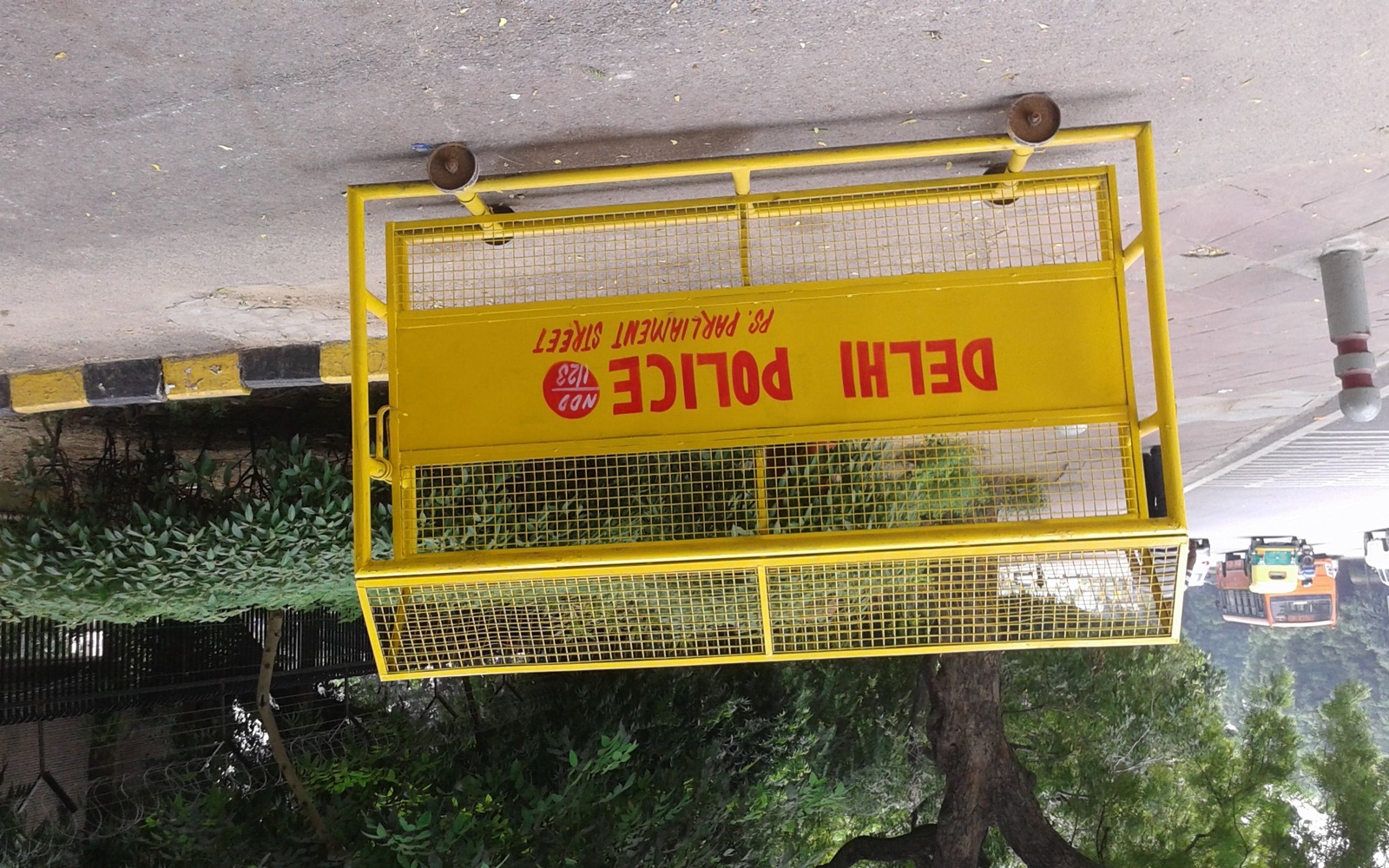
Jantar Mantar was sealed before the protest began. Al Jazeera and Reuters reported that mobile internet was suspended in the central business district, dozens of metro stations and markets were shut, and checkpoints were set up on roads into the city. Others detained included the YouTuber Dhruv Rathee, the lawyer Prashant Bhushan, AISA president Neha Bora and CPI(ML) general secretary Dipankar Bhattacharya. About 600 people were detained in Mumbai, according to ANI. With its leaders held, the CJP fell back on a plan B: Anjikya Shinde was asked to lead the protest and told supporters to make every place they stood “a Jantar Mantar”, Aaj Tak reported.
BJP spokesperson Sambit Patra called the protesters “anarchic elements” and the day a “flop show”. Congress president Mallikarjun Kharge said the government had turned the “Mother of Democracy” into a “Muzzled Democracy”. The UN human rights office asked the authorities to respect the right to peaceful assembly; India’s mission in Geneva called that concern “misplaced” and said the right is exercised in India, as in every democracy, “subject to reasonable restrictions in the interest of public order”.
Sunday 11 October: release, a quiet street, and a minister’s advice
The three leaders were produced before Special Executive Magistrate Sanhamitra on Sunday morning and released, Bar & Bench reported. Delhi Police said the preventive arrests had followed established legal procedure. The streets near Connaught Place were largely quiet, and police dispersed small groups, according to Aaj Tak. Dipke went home to Maharashtra after a death in his family; Das, Ranka and the party’s lawyer Ratna Singh held a press conference and said the protest would continue until Kumar resigns.
What a one-year peace bond does, and does not, forbid
The reports of Sunday’s release describe the condition in three different ways. Bar & Bench says the “template” bond order bars the three from “any activity which breaches peace” for one year. Delhi Police said a surety bond of ₹50,000 was filed “for maintaining peace and good behaviour”. Aaj Tak described it as a condition that they would not protest for a year. The first two match the law. The third does not.
The magistrate’s order has not been published, so the provision used is not on the record. The standard one for this situation is section 126 of the Bharatiya Nagarik Suraksha Sanhita (BNSS), the successor to section 107 of the old Criminal Procedure Code. It lets an Executive Magistrate who believes a person is “likely to commit a breach of the peace or disturb the public tranquillity” require a bond “for keeping the peace for such period, not exceeding one year, as the Magistrate thinks fit.”
Read against the text of the BNSS:
- The bond is about peace, not protest. Nothing in section 126 prohibits taking part in a peaceful, permitted demonstration. Dipke’s reading is consistent with the law; the “no protest for a year” summary is not.
- Breaking it has a specific cost. If the bond follows the section 126 procedure, section 141(1)(b) applies: once a magistrate is satisfied that a person has breached it, he can order the person arrested and held in prison until the bond period runs out, on top of forfeiting the ₹50,000 surety. Whether joining a protest police have not permitted counts as a breach would be for the magistrate to decide.
- Preventive custody has a 24-hour limit. Section 170, the BNSS power to arrest someone to prevent a cognizable offence, says no one held that way can be kept in custody for more than 24 hours unless another legal provision authorises it. That is why such detentions end, as this one did, with an appearance before a magistrate the next day.
Athawale’s 13 crore, checked against the Election Commission’s own breakdown
Athawale, Minister of State for Social Justice and president of the Republican Party of India (Athawale), an NDA ally, spoke on Sunday. “You demanded Dharmendra Pradhan’s resignation, Modi ji took the resignation and met all your demands. Now what need do you have to get into this Gyanesh Kumar matter?” he said, according to Live Hindustan. He told the CJP to protest for students instead, and called the campaign for the CEC’s resignation “baseless”.
He also defended the deletions with figures: of the 13 crore names cut, 6 crore had moved for work or business, 1 crore were registered in two places, and 3 crore were missing. Those are his numbers, not the Commission’s. Set against Election Commission data compiled by the Deccan Herald on 30 September, they look like this:
| Reason for deletion | Athawale, 11 October | EC data (all phases so far) |
|---|---|---|
| Moved away (shifted) | 6 crore | 9.5 crore, combined as "absent, permanently shifted or other" |
| Missing / absent | 3 crore | (included above) |
| Registered in more than one place | 1 crore | 1.01 crore |
| Dead | Not mentioned in the reported remarks | 2.8 crore |
| Total | 13 crore stated; categories add up to 10 crore | 13.3 crore |
Sources: Live Hindustan (Athawale's remarks, which the report quotes with omissions marked); Deccan Herald, 30 September 2026, analysing Election Commission data for SIR phases one to three. Draft-roll deletions; final-roll figures can be lower after claims.
His duplicate figure matches the Commission’s. His total roughly matches. What the Commission’s data does not do is split its biggest category, 9.5 crore people, into those who moved and those who could not be found. That split is exactly what the protesters and the opposition are asking about, and it is the one figure in Athawale’s defence that cannot be checked against published data. The roughly 2.8 crore deleted as dead are also absent from his quoted remarks, though the report’s ellipses mean he may have mentioned them.
People removed as absent or shifted can apply to be restored using Form 6, the ordinary new-voter form. No consolidated figure has been published for how many have got back on.
Monday’s two tests: a permission letter and a march to the Supreme Court
The CJP said it would go to a police station at 10 am on Monday, 12 October, to ask for permission for a peaceful protest, and would announce its own time and place if none was given within 24 hours, Live Hindustan reported. The INDIA bloc announced a march towards the Supreme Court for the same day, and the Delhi Metro closed the gates of six central stations, including Rajiv Chowk and Janpath. How police respond to both, and whether the three released leaders join any protest held without permission, is what will show what the bond means in practice. Neither outcome had been reported when this article was published.
Kumar has not commented. The Election Commission and the BJP deny any wrongdoing in the SIR.
Frequently asked
- Why was Abhijeet Dipke detained?
- Delhi Police detained Dipke, Saurav Das and Ashutosh Ranka on their flight after it landed in Delhi on 10 October 2026, before the Cockroach Janta Party’s protest at Jantar Mantar against CEC Gyanesh Kumar, for which permission had been refused. Police described them as preventive arrests.
- Does the peace bond stop the CJP leaders from protesting for a year?
- Not as reported. Bar & Bench and Delhi Police describe a one-year bond to keep the peace, backed by a ₹50,000 surety. A peace bond under BNSS section 126 forbids breaching the peace, not peaceful protest, though a magistrate can order detention for the rest of the bond period if he finds it has been breached. The order itself has not been published.
- How many names were deleted from voter rolls in the SIR?
- About 13.3 crore from draft rolls across the phases so far, according to Election Commission data analysed by the Deccan Herald on 30 September 2026: about 9.5 crore as absent, shifted or other, 2.8 crore as dead and 1.01 crore as multiple enrolments. Final-roll figures can be lower after claims.