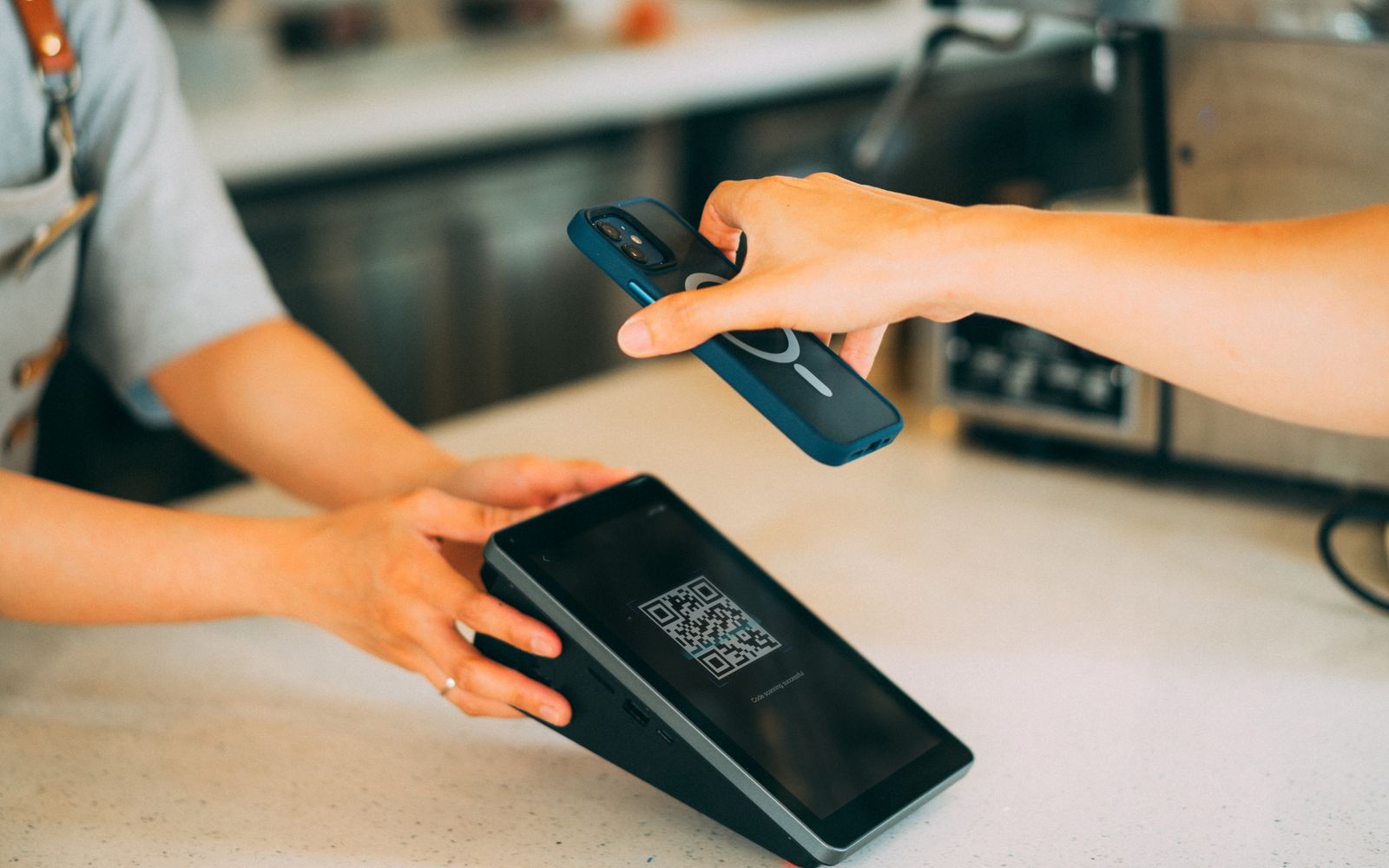
From 15 October, merchants pay 0.4% on UPI payments above ₹2,000. If I pay a shop ₹5,000 through UPI using a RuPay credit card instead of my bank account, does the same 0.4% apply?
No. The government’s own FAQ on the new fee answers this directly: UPI payments made from a RuPay credit card, or from a bank credit line, sit outside the 0.4% framework and “follow standard credit card guidelines.” That is not good news for the merchant. Credit card payments on UPI have carried card-style merchant charges since they were allowed in 2022, and those charges are normally higher than 0.4%, not lower.
UPI from a bank account
The new framework
- Free to the merchant up to ₹2,000.
- 0.4% above ₹2,000, capped at ₹300 from ₹75,000.
- Flat ₹5 in categories such as fuel, rail, telecom, insurance and utilities.
- Nil for small merchants on the P2PM tier at any amount.
UPI from a RuPay credit card
Credit card rules, since 2022
- Not covered by the 0.4% framework.
- Nil only for small merchants, and only up to ₹2,000.
- Otherwise the card’s existing interchange-based charges apply.
- The government puts credit card MDRs generally at 1.5% to 2.5%.
Sources: DFS FAQ of 15 September 2026 (Q3, Q4, Q23, Q33, Q36); NPCI circular of 4 October 2022. The customer pays no fee in either case.
What the government’s FAQ says, word for word
The Department of Financial Services published 42 questions and answers on 15 September, the day the fee was announced, and NPCI hosts the same document. Question 36 asks exactly this: “Does MDR apply to transactions made via Credit Cards linked on UPI or Credit Lines?” The answer in full:
Credit-linked UPI payments, such as RuPay Credit Cards linked to UPI or pre-sanctioned bank credit lines, operate under separate credit product rules. Because credit-linked transactions involve short-term loans funded by issuing banks, they follow standard credit card guidelines. The MDR discussed in this amendment apply specifically to direct users-account-to-merchant-account UPI transactions.
Department of Financial Services, FAQ on MDR on select UPI (P2M) transactions, Q36
Two kinds of payment are named there. RuPay credit cards have been linkable to UPI since the Reserve Bank said on 8 June 2022 that “to start with Rupay credit cards will be enabled with this facility.” Pre-sanctioned credit lines, loans a bank approves in advance and lets you spend through UPI, followed under RBI circular RBI/2023-24/58 of 4 September 2023. Both are borrowed money, and both stay on credit card terms.
So is a credit card payment on UPI free for the merchant?
Only in one narrow case. When NPCI set the rules for RuPay credit cards on UPI in its operating circular NPCI/2022-23/RuPay/019 of 4 October 2022, it made one exemption: “Nil MDR (no interchange, PSP & app provider charges) shall apply for this category up to the transaction amount less than and equal to Rs 2,000,” the category being small merchants. Above ₹2,000, or at any merchant that is not small, the card’s existing interchange rates apply, as Inc42 reported from the circular the day it was issued.
That creates an inversion most coverage of the new fee has missed. At a regular shop, a ₹1,500 payment from your bank account through UPI costs the merchant nothing, even after 15 October. The same ₹1,500 from a RuPay credit card through the same UPI app is not covered by any exemption: the circular’s ₹2,000 free band on the card side is written for small merchants only, so the card’s normal charges can apply.
What the difference looks like in rupees
None of the documents we read publishes a specific merchant charge for RuPay credit cards on UPI, so the table below does not invent one. It uses the government’s own figure from Q4 of the same FAQ, “standard credit card MDRs typically range from 1.5% to 2.5%”, to show the likely size of the gap at a regular merchant.
| Payment | From a bank account (new framework) | From a credit card at 1.5% | From a credit card at 2.5% |
|---|---|---|---|
| ₹1,500 | ₹0 | ₹22.50 | ₹37.50 |
| ₹3,000 | ₹12 | ₹45 | ₹75 |
| ₹10,000 | ₹40 | ₹150 | ₹250 |
| ₹50,000 | ₹200 | ₹750 | ₹1,250 |
| ₹1,00,000 | ₹300 (capped) | ₹1,500 | ₹2,500 |
Our calculation. The bank-account column follows the DFS FAQ (0.4% above ₹2,000, ₹300 cap from ₹75,000). The credit card columns apply the FAQ's general 1.5–2.5% range for credit cards; they are an estimate, not a published RuPay-on-UPI rate. Flat-₹5 categories and small merchants are excluded. The ₹1,500 row assumes card charges apply below ₹2,000 at a non-small merchant, since the circular's nil band covers small merchants only.
The pattern holds at every size. On a ₹1 lakh payment the bank-account route costs a regular merchant ₹300 at most, while a credit card at the government’s own typical range costs five to eight times that. For the full breakdown of the new fee itself, including the ₹5 categories, see our explainer on the October framework.
Two different tests for a “small merchant”
Both systems exempt small merchants, but they do not use the same definition, and a shop can pass one test while failing the other.
Bank-account UPI: the P2PM tier
For the new 0.4% fee
- Receives up to ₹1 lakh a month through UPI QR into a personal account.
- Moved to the regular merchant category after more than ₹1 lakh a month for three consecutive months.
- GST registration not needed.
Credit card on UPI: RBI’s 2017 definition
For the nil charge up to ₹2,000
- Turnover up to ₹20 lakh in the previous financial year.
- Set in RBI circular RBI/2017-18/105 of 6 December 2017, which NPCI’s framework uses to classify small merchants.
The P2PM rules are from Q23, Q24, Q28 and Q29 of the DFS FAQ. One is a monthly UPI inflow test; the other is an annual turnover test.
Where the fee goes, and who cannot be charged
The question that prompted this piece asked whether the government would charge the 0.4%. It does not collect it. According to the FAQ’s first answer, the MDR “is distributed only amongst the UPI ecosystem”, meaning the banks and payment companies that run the system, to pay for infrastructure, fraud prevention and customer service. The merchant pays it to its acquiring bank.
The same document sets three protections for customers paying from a bank account. Consumers are not charged (Q15). UPI apps may not add a platform fee (Q17). And merchants “cannot pass on MDR charges to customers while accepting payments through UPI” (Q34).
- UPI AutoPay mandates
- Recurring payments such as utility bills, OTT subscriptions and SIPs carry no prescribed MDR (Q22).
- Capital markets
- Mutual funds, stockbrokers and securities dealers: 0.02% of the transaction, capped at ₹300 (Q37).
- Flat ₹5 categories
- Railways, telecom, insurance and fuel “among others” (Q33), and public utilities such as electricity, water and piped gas (Q41), above ₹2,000.
- Education fees
- Treated as an industry programme with flat-fee or capped structures above ₹2,000; free up to ₹2,000 (Q42).
- Person-to-person transfers
- Free for both sides at any amount, including self-transfers (Q16).
What we could not confirm
Two limits on this answer, stated plainly. First, the exact merchant charge on a RuPay credit card payment through UPI is not published in any of the documents we read; it depends on the card network’s interchange and on what the acquiring bank charges the merchant. The 1.5% to 2.5% range above is the government’s general figure for credit cards, not a RuPay-specific rate. A merchant who wants the real number should ask the bank or payment aggregator that issued its QR code.
Second, NPCI’s website did not allow direct retrieval of its 2022 circular while this was being written. Its nil-MDR rule for small merchants is quoted as reproduced by Inc42 on the day of issue and as indexed from NPCI’s own copy. If NPCI has changed those terms since, this page will be corrected.
Frequently asked
- Does the 0.4% UPI MDR apply to RuPay credit card payments?
- No. Q36 of the government’s FAQ says credit-linked UPI payments, including RuPay credit cards and pre-sanctioned credit lines, follow standard credit card guidelines. The 0.4% applies only to account-to-merchant UPI payments.
- Does the customer pay anything extra when using a credit card on UPI?
- No fee is charged to the customer. Merchant charges are paid by the merchant, and the FAQ states merchants cannot pass MDR on to customers when accepting UPI payments.
- Is any RuPay credit card payment on UPI free for the merchant?
- Yes, one case: NPCI’s October 2022 circular set nil MDR for small merchants on transactions up to ₹2,000. Other card payments on UPI carry the card’s normal charges.
- Does the government collect the 0.4% UPI fee?
- No. The FAQ says the MDR is distributed only among the UPI ecosystem: the banks and payment companies that run the system.