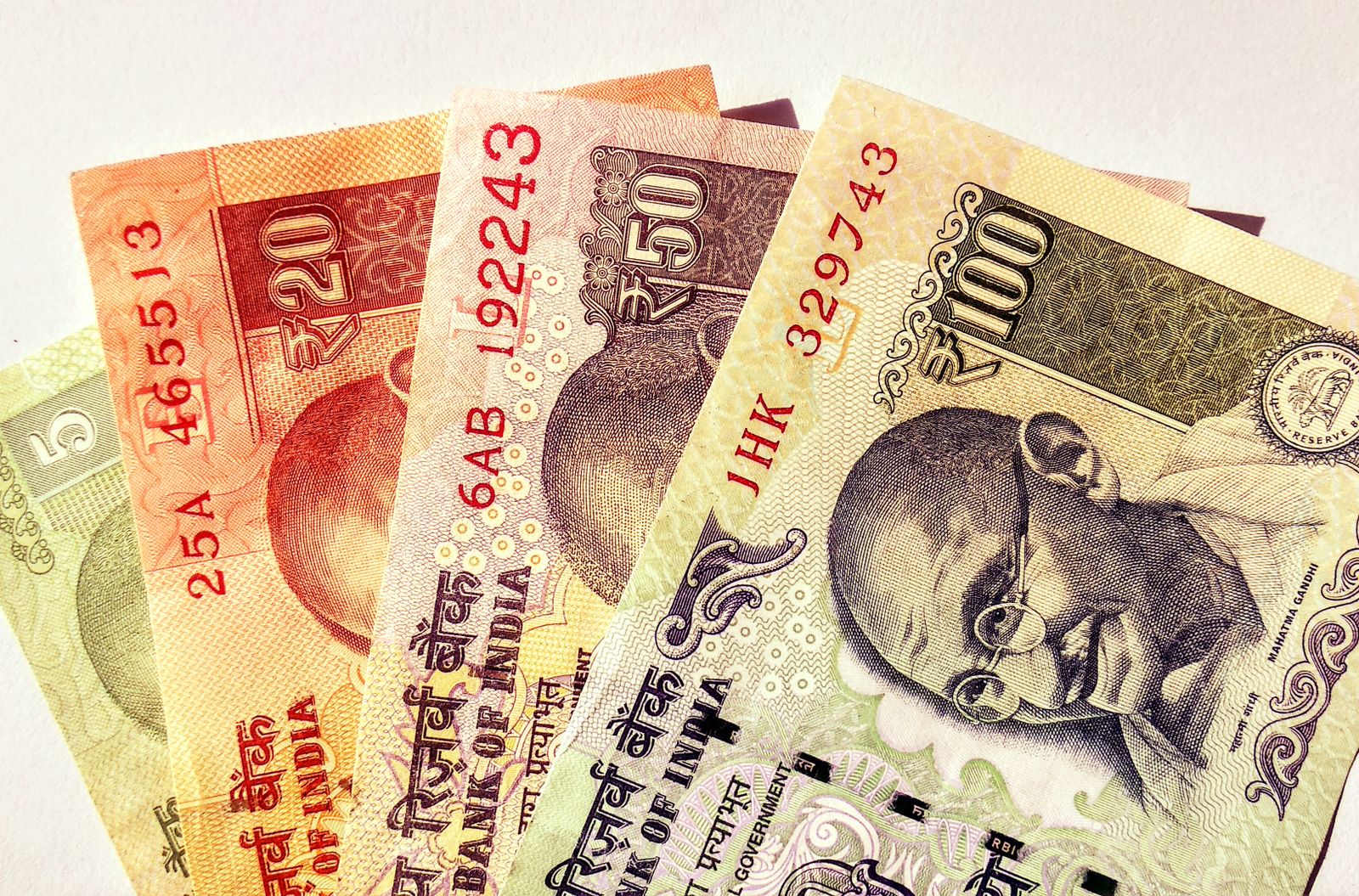
The new income tax rules from April 2026 have been reported almost everywhere as a single event, and that is the reason so many people have drawn the wrong conclusion from them. Three separate pieces of legislation came into force on Wednesday, 1 April 2026. They were drafted at different times, for different purposes, and they affect different people. Read together as one announcement they suggest a sweeping overhaul of what Indians pay. Read apart, they describe something much narrower and much more useful to know precisely.
This guide separates them, and then does the arithmetic the headlines skip — because the single largest change being celebrated turns out to be worth exactly nothing to a great many of the people reading about it.
Three laws, one date
| Instrument | What it replaced | What it actually does |
|---|---|---|
| Income-tax Act, 2025 | Income-tax Act, 1961 | Restructures and renumbers the statute. No change to rates or tax policy |
| Income-tax Rules, 2026 | Income-tax Rules, 1962 | Operationalises the Act — HRA cities, allowance limits, PAN thresholds, new forms |
| Finance Act, 2026 | Annual budget legislation | Filing deadlines, the FAST-DS disclosure scheme and other budget measures |
The Act was passed by Parliament on 12 August 2025 and received presidential assent on 21 August 2025. The Rules were notified on Friday, 20 March 2026. All three took effect on Wednesday, 1 April 2026, applying from tax year 2026-27.
Keep that table in mind for the rest of this guide, because almost every piece of confusion about the new income tax rules from April 2026 comes from attributing something to the wrong row — a rate change credited to the Act that the Act never made, or a deadline credited to the Rules that came from the Finance Act.
The Act: 536 sections, and nothing you pay
The Income-tax Act, 2025 is the headline reform and the least consequential of the three for a household budget. The government has been unusually direct about this. Its own framing, on the Income Tax Department’s portal, is a “streamlined, simplified, and modern tax code with reduced compliance burden, consolidated provisions, and clear definitions”. Not a new rate anywhere.
| Old | New | |
|---|---|---|
| Sections | 819 | 536 |
| Schedules | 14 | 16 |
| Rules | 511 | 333 |
| Forms | 399 | 190 |
| Period terminology | "Previous year" and "assessment year" | A single "tax year" |
| Tax rates and slabs | — | Unchanged |
Figures published by the Income Tax Department on its page setting out the objective and scope of the new Act.
The new legislation does not alter tax rates or increase the tax burden.
Income Tax Department, on the transition to the Income-tax Act, 2025
What the Act does change is where everything lives. Six decades of amendments have been reorganised, which means the section numbers Indians have used for a lifetime have moved. The Income Tax Department has published its own utility for looking up a 1961 section against its 2025 counterpart, along with a transition FAQ — both linked in the sources at the foot of this guide. If you need a specific section mapped, use the department’s tool rather than a blog; it is authoritative and free.
The practical consequence for most people is not the sections but the forms, which have been renamed wholesale:
| What it does | Old form | New form |
|---|---|---|
| Salary and pension TDS certificate | Form 16 | Form 130 |
| Annual tax credit statement | Form 26AS | Form 168 |
| Investment and deduction declaration to employer | Form 12BB | Form 124 |
| Quarterly TDS return | Form 26Q | Form 140 |
| TDS on property, rent and certain transfers | Form 26QB / 26QC / 26QE | Form 141 |
| Tax audit report | Form 3CA / 3CB / 3CD | Form 26 |
Mapping as set out in professional analysis of the notified Rules. Expect employers and payroll portals to use old and new names interchangeably through the first year.
The Rules: where the money actually moved
The Income-tax Rules, 2026, notified on Friday, 20 March 2026, are the instrument that actually changes rupees. When people talk about the new income tax rules from April 2026 and mean something that affects their payslip, this is what they are describing — and it is the row of the table the coverage should have led with.
HRA: four new cities, and why it may be worth nothing
The change everyone reported: the 50% house rent allowance band, previously restricted to Delhi, Mumbai, Kolkata and Chennai, now covers eight cities. Bengaluru, Hyderabad, Pune and Ahmedabad have been added. Everywhere else remains at 40%.
The part almost nobody reported: HRA exemption is the lowest of three figures, and raising one of them only helps if that one was the binding constraint. The three limbs are the actual HRA received, the rent paid minus 10% of salary, and the percentage of salary — now 50% in those eight cities.
| Monthly rent | Exempt at 40% | Exempt at 50% | Extra exemption | Tax saved at 31.2% |
|---|---|---|---|---|
| ₹25,000 | ₹1,80,000 | ₹1,80,000 | ₹0 | ₹0 |
| ₹40,000 | ₹3,60,000 | ₹3,60,000 | ₹0 | ₹0 |
| ₹50,000 | ₹4,80,000 | ₹4,80,000 | ₹0 | ₹0 |
| ₹60,000 | ₹4,80,000 | ₹6,00,000 | ₹1,20,000 | ₹37,440 |
| ₹75,000 | ₹4,80,000 | ₹6,00,000 | ₹1,20,000 | ₹37,440 |
| ₹1,00,000 | ₹4,80,000 | ₹6,00,000 | ₹1,20,000 | ₹37,440 |
Computed as the lowest of the three limbs at each rent level. Tax saved is at the 30% slab plus 4% cess. Old regime only. At rents up to ₹50,000 the binding limb is rent minus 10% of salary, so the city reclassification changes nothing; above that the benefit appears and is then capped by the HRA actually received.
Below roughly half your salary in annual rent, the reclassification is worth zero. Above it, the gain appears and then flattens, capped by how much HRA your employer actually pays you. The general rule that falls out of the arithmetic: you need annual rent above 50% of salary to get anything, and above 60% of salary to get the full benefit — and your HRA component has to be at least half your salary for the cap not to bite first.
The allowance increases
These are genuinely large multiples, and they are the first revision in decades. Rule 280 raises two limits that had not moved since an era when they were meaningful:
| Allowance | Old limit | New limit | Annual increase | Tax saved at 31.2% |
|---|---|---|---|---|
| Children’s education | ₹100/month/child | ₹3,000/month/child | ₹69,600 | ₹21,715 |
| Hostel expenditure | ₹300/month/child | ₹9,000/month/child | ₹2,08,800 | ₹65,146 |
| Both, at the maximum | ₹9,600/year | ₹2,88,000/year | ₹2,78,400 | ₹86,861 |
Capped at two children. Computed at the 30% slab plus 4% cess. These are ceilings, not entitlements — the exemption is the lower of the limit and what your employer actually pays you as that allowance, so a household whose salary structure contains no hostel allowance gets nothing from the hostel row.
That last sentence in the note is the whole caveat. A thirty-fold increase in a ceiling is only worth something if your employer pays the allowance in the first place, and most salary structures do not contain a ₹9,000 monthly hostel component. The realistic gain for a typical salaried parent is a fraction of the ₹86,861 headline.
The Rules also raise several perquisite valuations — meal vouchers from ₹50 to ₹200 per meal, employer gifts from ₹5,000 to ₹15,000 a year, and revised valuations for company cars and interest-free medical loans.
PAN quoting thresholds
Quietly useful, and almost unreported. The transactions that require you to quote a PAN have been recalibrated upward, which reduces friction on ordinary spending.
| Transaction | Old threshold | New threshold |
|---|---|---|
| Hotel and restaurant bills | ₹50,000 | ₹1,00,000 |
| Purchase of immovable property | ₹10 lakh | ₹20 lakh |
| Purchase of a motor vehicle | — | ₹5,00,000 |
PAN requirements have also been removed entirely for certain transactions, including payments for foreign travel and the purchase of some bank instruments.
The regime trap
Here is the sentence that should have been the headline on every piece written about this. The new tax regime is the default. The two changes generating the most coverage — the HRA city expansion and the allowance increases — sit under the old regime. Anyone who has not actively opted into the old regime is reading about relief they cannot claim.
| Change | Old regime | New regime |
|---|---|---|
| HRA 50% in eight cities | Available, if the third limb binds | Not available at all |
| Children’s education allowance ₹3,000/month | Available | Not available |
| Hostel allowance ₹9,000/month | Available | Not available |
| Meal voucher ₹200 per meal | Available | Commentary disagrees — verify |
| Higher PAN thresholds | Applies | Applies |
| Renumbered forms and sections | Applies | Applies |
| Filing deadline changes | Applies | Applies |
The right-hand column is the one most readers are actually in. Switching regimes to capture these benefits is a full calculation, not a reflex — the new regime's lower rates frequently beat the old regime's deductions.
None of that is an argument for switching. It is an argument for checking which column you are in before you celebrate. If you are weighing the two regimes, do it as a calculation on your own numbers rather than on a headline — the same discipline that applies to comparing any two financial products, as in our guide to fixed deposits, recurring deposits and overdrafts, where the advertised rate is rarely the number that decides the outcome.
The Finance Act: the deadline that probably isn’t yours
This is the most consequential error circulating, because acting on it means filing late.
| Who you are | Form | Due date |
|---|---|---|
| Salaried and other non-business taxpayers | ITR-1 / ITR-2 | Friday, 31 July 2026 |
| Non-audit business and professional filers, and partners | ITR-3 / ITR-4 | Monday, 31 August 2026 |
| Taxpayers requiring a tax audit | — | Saturday, 31 October 2026 |
The 31 August date is a permanent amendment to section 139(1) made by the Finance Act, 2026, intended to give small businesses and professionals more time to finalise accounts. It is not a general extension.
One genuinely useful change alongside it: the window for filing a revised return has been extended from nine months to twelve months from the end of the tax year.
What changed for businesses and non-residents
The Rules also carry a substantial body of change that has nothing to do with salaried taxpayers, and it is worth knowing it exists so you do not mistake it for something that applies to you.
- A digital economy nexus test. Non-resident entities can be taxed on the basis of earning ₹20 million or more from Indian transactions, or engaging 300,000 or more users in India.
- Capital gains holding periods clarified for converted securities, cross-border restructuring and assets declared under the Income Declaration Scheme, 2016.
- Corporate governance conditions requiring dividend distribution within India, shareholder registers held domestically and annual general meetings held in India.
- Electronic books of account under Rule 46 must be accessible from India, backed up on India-based servers and updated daily.
- Fair market value methodology standardised — listed shares valued by the highest-volume exchange, unlisted shares requiring a merchant banker valuation.
- Zero-coupon bonds restricted to tenures of ten to twenty years with investment-grade ratings from at least two agencies.
If you hold assets abroad, the disclosure obligations that sit alongside all of this are unchanged by the new Act and are covered in our guide to Indian money in overseas property and the Schedule FA rules, including the disclosure window that closes on 31 December 2026.
What to do before you file
Final verdict
The new income tax rules from April 2026 amount to considerably less than the coverage suggests, and the reason is structural rather than editorial. Three laws arrived on one day. The one with the grandest name — a new Income-tax Act replacing a statute that had stood since 1961 — changed no rate and no liability. The one that actually moved money, the Rules, moved it almost entirely within a tax regime that most salaried Indians have already left. And the deadline change that has been reported as general relief applies to a category most readers are not in.
Strip it back and the honest summary is short. If you are on the new regime, what changed for you on 1 April 2026 is the name of your Form 16, some PAN thresholds and, if you run a non-audit business, a month of extra filing time. If you are on the old regime, you may have gained something real — but whether the HRA reclassification is worth ₹37,440 or exactly nothing depends on a three-limb calculation that no headline can do for you, and that this guide has now done for six different rent levels.
That is not a criticism of the reform. A statute reorganised from 819 sections to 536, with forms cut from 399 to 190, is a genuine simplification and will pay off over years rather than in a single April. It is simply a different thing from what “new income tax rules” sounds like — and knowing which of the three laws you are actually reading about is what turns a headline into a decision.
Frequently asked
- What actually changed in income tax from 1 April 2026?
- Three separate laws took effect on the same day. The Income-tax Act, 2025 replaced the 1961 Act and restructured the statute into 536 sections without changing any rate. The Income-tax Rules, 2026 replaced the 1962 Rules and carry the changes that move money — HRA cities, allowance limits, PAN thresholds and renamed forms. The Finance Act, 2026 changed some filing deadlines. Most coverage merges the three, which is why the picture looks more dramatic than it is.
- Did income tax rates change on 1 April 2026?
- No. The government has been explicit that the Income-tax Act, 2025 does not alter tax rates or increase the tax burden. It is a restructuring of the statute for clarity and ease of compliance, not a change in tax policy. Slabs under both regimes are unchanged.
- Which cities get the 50% HRA exemption now?
- Eight: Delhi, Mumbai, Kolkata and Chennai, joined from FY 2026-27 by Bengaluru, Hyderabad, Pune and Ahmedabad. Everywhere else stays at 40%. It applies only under the old tax regime — HRA exemption is not available under the new regime at all.
- How much is the HRA change actually worth?
- Often nothing. The exemption is the lowest of three figures, and the percentage-of-salary limb only binds when rent is high relative to salary. On a salary of ₹12 lakh with ₹6 lakh of HRA, the change is worth zero until annual rent passes 50% of salary — about ₹50,000 a month — after which it caps at ₹1.2 lakh of extra exemption, or about ₹37,440 of tax at the top slab.
- Is the ITR deadline now 31 August for everyone?
- No, and this is the most common error in the coverage. For AY 2026-27 salaried taxpayers filing ITR-1 or ITR-2 still face 31 July 2026. The 31 August date applies to non-audit business and professional filers using ITR-3 or ITR-4 — a permanent amendment to section 139(1) made by the Finance Act, 2026. Audit cases remain at 31 October.
- Do the higher allowance limits apply under the new tax regime?
- The children education and hostel allowance exemptions under the Income-tax Rules, 2026 are available under the old regime. Since the new regime is the default and most salaried taxpayers are on it, the headline thirty-fold increase reaches fewer people than the coverage suggests. Professional commentary is not consistent on the treatment of meal vouchers specifically, so confirm that one with your payroll team rather than assuming.